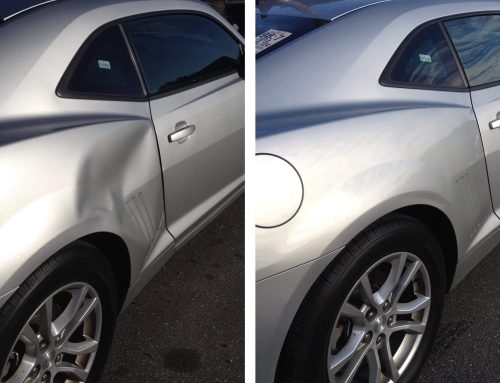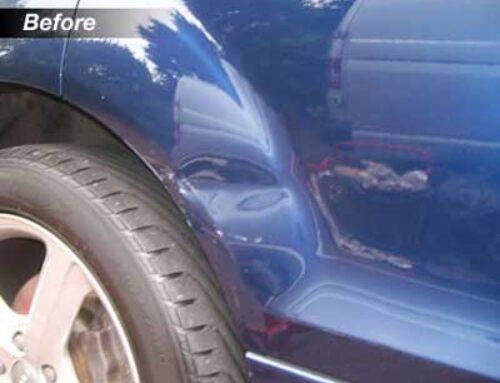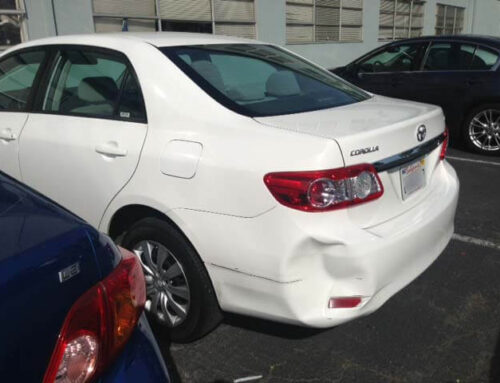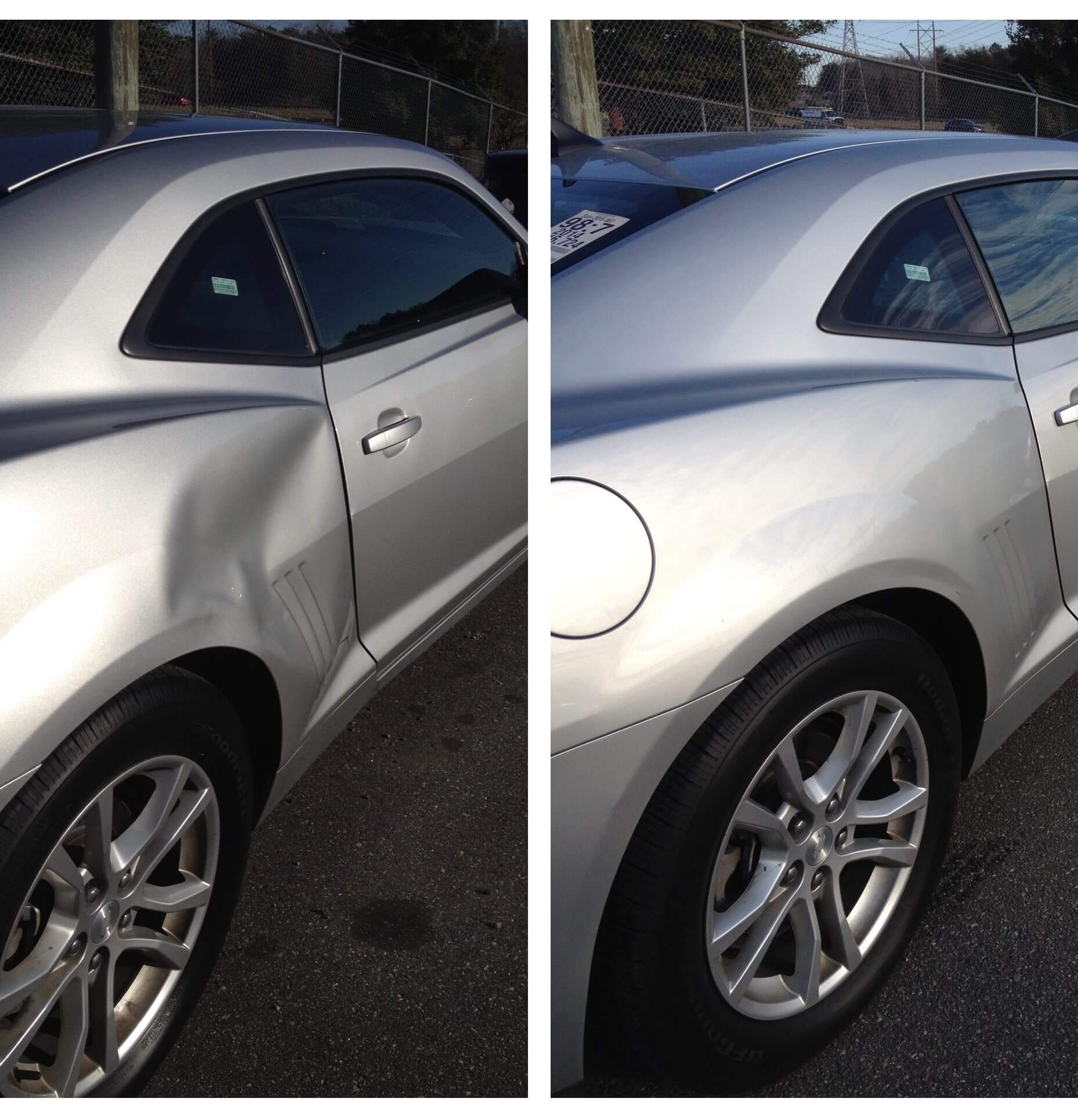
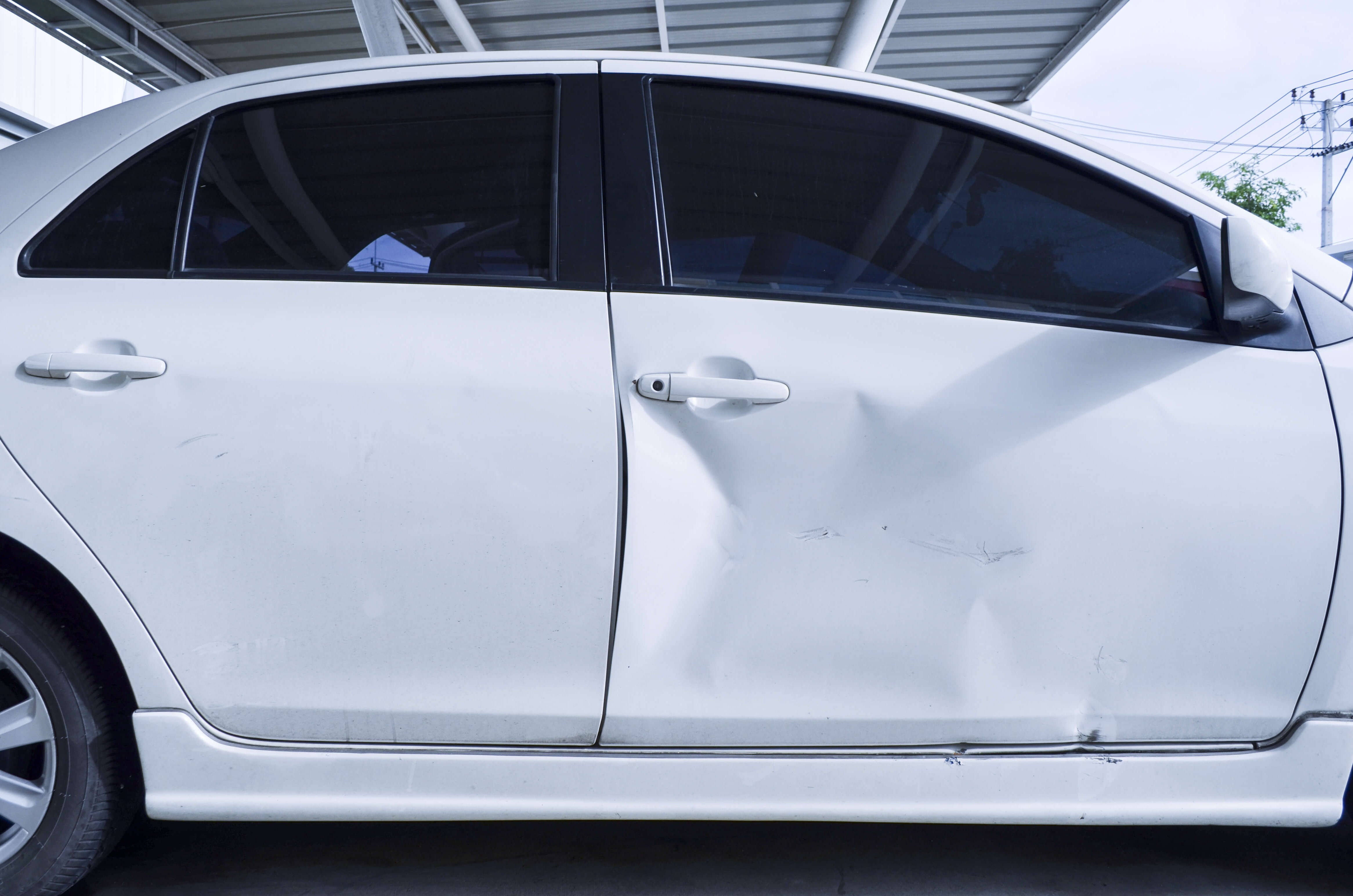
A dent near the top of your car door can be frustrating. Maybe another vehicle’s door struck yours in a parking lot, or something bumped the panel just below the window. The paint looks intact, and the dent doesn’t seem especially large, so you start wondering whether paintless dent repair could fix it.
The location makes a difference.
A door dent near the window may be suitable for paintless repair, but the technician must first evaluate the damage and what’s behind the panel. Window glass, seals, internal reinforcement, wiring, and available tool clearance can all influence the repair approach. In some cases, the metal can be reached safely from inside the door. In others, access limitations may require a different technique or conventional body repair.
At Piedmont Dent Repair in Charlotte, NC, we evaluate dents based on more than their size. The position of the damage, condition of the paint, panel material, and available access all affect whether paintless dent repair (PDR) makes sense.
If your dent sits near the window opening, here’s what you should know before scheduling an assessment.
What Sits Behind the Upper Door Panel
From outside the vehicle, a car door may look like one continuous piece of metal.
Inside, however, the assembly contains several components that allow the window and door to operate.
That’s one reason upper-door dents deserve careful attention.
The Outer Panel Is Only One Part of the Door
The exterior metal panel forms the visible surface of the door.
Behind it, the door assembly may contain an inner structure, window glass, guide channels, regulators, reinforcement, wiring, and other vehicle-specific components.
These parts aren’t arranged identically on every car.
A sedan, SUV, truck, or coupe may have a different door layout and different access points.
When a dent appears near the window, the technician needs to understand which components occupy the space behind that location.
A dent that looks easy to reach from outside may be directly in front of glass or a structural member.
Window Glass and Regulators
Most power windows move through a guided system inside the door.
When the window is lowered, the glass may occupy part of the area behind the exterior panel.
When the window is raised, the glass changes position, but tracks, mounting points, and regulator components may still restrict access.
A technician must consider these parts before inserting or positioning repair tools.
Contact between a tool and the glass or window mechanism could create avoidable damage.
The goal is to work the dent without compromising the components that allow the window to move correctly.
Seals and Weatherstripping
The area where the window enters the door contains seals or belt moldings that help manage water, debris, and contact with the glass.
These components may appear flexible, but they aren’t simply disposable gaps for repair tools.
Disturbing or damaging them can affect their fit and function.
Some vehicle manufacturers specifically restrict the use of wedges between the glass and window molding during PDR.
A professional should consult the applicable vehicle repair guidance before choosing an access method.
Reinforcement and Internal Bracing
Vehicle doors may contain reinforcement structures that contribute to their intended design.
These components can limit access to the back of a dent.
A technician should not cut, drill, or alter reinforcement simply to create an easier path for a PDR tool.
If the required access cannot be obtained using an approved method, the repair plan needs to change.
That can mean choosing a different technique or recommending conventional repair.
How Glass and Reinforcement Limit Access
In paintless dent repair, access is often as important as the visible shape of the dent.
A technician needs to reach or influence the damaged metal in a controlled way while protecting the rest of the vehicle.
That can become more complicated near the top of a door.
Why a Small Upper-Door Dent Can Be Difficult
It’s natural to assume a small dent should be easier to repair than a large one.
But imagine two dents.
One is in the middle of a broad section of door metal with clear access behind it.
The other is smaller but sits directly below the window, near reinforcement or a tightly enclosed part of the door.
The second dent may present a greater access challenge despite being smaller.
The technician’s ability to reach the damaged area and control the metal influences which repair methods are practical.
That’s why an accurate assessment needs more than a measurement of the dent’s diameter.
Clearance for Specialized Tools
PDR technicians use specialized tools designed for controlled pressure and precise adjustments.
The available clearance affects which tools can be positioned behind the panel.
A narrow gap may limit the technician’s working angle or prevent the appropriate tool from reaching the center of the dent.
Even when a tool fits, that doesn’t automatically mean it can be used safely.
The technician also needs to avoid unintended contact with glass, wiring, and other internal components.
The appropriate approach depends on the vehicle and the location of the damage.
Why Protecting the Window Matters
The window must remain protected throughout the repair process.
Some vehicle-specific manufacturer guidance calls for protective equipment around the glass and prohibits certain access techniques that may damage window moldings.
Those restrictions should be treated as part of the repair planning process, not as optional obstacles to work around.
A dent repair should not introduce a new problem such as damaged glass or a compromised window seal.
At Piedmont Dent Repair, we recommend professional assessment before attempting any upper-door repair.
Vehicle owners should avoid inserting household tools into the window opening or trying to push the dent out themselves.
Dent Shape Still Matters
Access isn’t the only factor affecting door dent near window paintless repair suitability.
The technician also considers whether the damage has sharp creases, stretched metal, cracked paint, or distortion along the top edge.
A relatively shallow dent with intact paint may be a possible candidate when suitable access is available.
A sharply creased dent near a folded panel edge may be substantially more complicated.
For larger damage, the amount of metal deformation can matter as much as the overall size.
Even when you’re researching large dent removal, the correct starting point is an examination of the actual panel.
When Trim Access or Exterior Techniques May Be Considered
There is no single access method that works for every upper-door dent.
The technician selects an approach after examining the door construction, repair history, and damage.
That may involve approved interior access or a suitable exterior technique.
Sometimes neither option is appropriate for paintless repair.
Working From Behind the Door Panel
One PDR approach involves reaching the back of the damaged metal with specialized tools.
For some doors, the necessary access may be available through existing service openings.
Other situations may require removal of certain trim components under the vehicle manufacturer’s repair procedures.
Whether this is appropriate depends on the construction of the door.
A technician should consider any required disassembly, potential effects on interior components, and how those parts will be restored after the repair.
Removing trim unnecessarily can create more complications than the original dent.
Will the Door Trim Need to Be Removed?
Not always.
Some dents can be accessed without removing the interior door trim.
Other locations may require additional access, provided that access can be established safely and in accordance with applicable repair information.
If trim removal is proposed, ask the technician why it’s necessary and whether the work is included in the repair estimate.
The professional should also consider any electrical connectors, moisture barriers, clips, and other components affected by disassembly.
On vehicles with door-mounted safety systems, appropriate manufacturer procedures are particularly important.
You shouldn’t remove the door panel yourself in preparation for the appointment unless a qualified professional specifically directs an appropriate arrangement.
Can Exterior Glue Pulling Be Used?
In certain PDR repairs, technicians use adhesive pulling tabs attached to the exterior paint surface.
This can be useful when direct backside access is limited.
However, glue pulling is not suitable for every panel or finish.
The technician must consider paint condition, dent shape, previous refinishing, and the requirements of the repair materials.
A previously repainted panel may present additional paint-adhesion risks.
The use of exterior pulling also doesn’t automatically make an upper-door dent repairable. Tight panel edges, creases, and other damage characteristics can still limit the result.
Why the Technician May Recommend Another Repair
Sometimes the safest option is not to proceed with PDR.
For example, a technician may find that the dent is positioned behind a reinforcement area that cannot be reached using an approved method.
Or the damage may involve broken paint or significant metal distortion.
In those situations, conventional body repair may be more appropriate.
The purpose of an inspection is to identify a suitable repair method, not to force every dent into a paintless process.
For a broader look at how technicians select methods, see our guide to the efficient way to remove a dent from a car door.
Checking Seals, Windows, and Door Operation Afterward
A repair near the window isn’t complete simply because the visible dent looks better.
The technician should also consider whether the relevant door components continue to operate as intended.
Exactly what needs checking depends on the access method and whether any parts were disturbed during the repair.
Check Normal Window Movement
If the repair involved access near the window mechanism, the window’s operation may need to be checked.
Relevant observations include whether the glass:
-
Moves through its normal travel
-
Appears properly aligned
-
Operates without unexpected resistance
-
Closes and seals as intended
Some vehicles have model-specific window indexing, initialization, or anti-pinch procedures that may apply after certain disassembly or electrical work.
The technician should follow manufacturer guidance where relevant.
A cosmetic dent repair should not leave the window working differently than it did before.
Inspect Seals and Moldings
The seals near the top of the door help manage contact between the glass and the door opening.
If a molding or trim component was disturbed, its condition and fit should be checked.
Look for visible gaps, loose trim, or changes in how the glass meets the seal.
This doesn’t mean every upper-door PDR appointment requires extensive seal testing.
It means the final checks should reflect the parts affected by the repair.
If you already had a window or seal problem before the dent occurred, disclose that during the initial assessment.
Confirm Door Operation
Depending on the repair location and work performed, the technician may also check that the door opens, closes, and latches normally.
The upper door frame and surrounding components should not be altered merely to reach a dent.
If the original impact affected door alignment, window operation, or structural components, a more extensive collision-repair assessment may be needed.
PDR is a cosmetic panel repair method, not a substitute for evaluating potentially damaged safety or structural systems.
Review the Repair Under Appropriate Lighting
Once the repair is finished, the panel should be examined under suitable lighting.
PDR technicians use reflections to evaluate the shape and surface of the repaired area.
This is especially useful when a dent is close to a panel edge or window molding, where ordinary reflections may make small imperfections difficult to see.
The final result depends on the original damage and the repairability of the panel.
A responsible technician should explain any limitations before work begins and discuss the outcome afterward.
What to Include in an Upper Door Dent Inquiry
If you’re contacting Piedmont Dent Repair about a dent near your car window, sharing a few details can help us begin evaluating the damage.
You don’t need to know exactly how the door is constructed.
The goal is to tell us what happened and show where the dent is located.
Describe the Exact Dent Location
Instead of saying only that the dent is on the door, describe its position.
For example:
“I have a dent on the driver’s front door about an inch below the window trim. The paint looks intact, and the window still works normally.”
If the dent extends into the upper edge or near the mirror area, mention that too.
Location details help us understand possible access restrictions.
Send Photos From Several Angles
Photos can help with an initial review.
Useful images include:
-
A wider photo showing the entire door
-
A close-up of the dent
-
An angled photo showing its depth or crease
-
A photo showing how close it is to the window trim
-
Any visible paint damage or previous repair marks
Good lighting can make the dent easier to understand.
However, photos may not reveal everything behind the panel.
An in-person assessment may still be necessary before we can confirm repairability or provide a final estimate.
Mention Problems With the Window or Door
Tell us if the window has become noisy, moves unevenly, or fails to close properly.
Also mention whether the door has trouble latching or appears misaligned.
These symptoms may indicate concerns beyond a cosmetic dent.
If the impact affected the window system or door structure, a qualified repair professional should evaluate those issues before paintless dent work proceeds.
Disclose Previous Paint or Bodywork
If the door has been repainted or repaired after an earlier collision, let us know.
Previous body filler and refinishing may affect how the panel responds to metal movement or exterior pulling.
Even when the damage looks minor, that history can influence the repair recommendation.
For more general information about dent shapes and repair methods, read our article on how to remove a dent from a car door efficiently.
Ask About the Assessment Process
Before scheduling, you can ask whether the dent appears suitable for an initial photo review and whether a physical inspection is likely to be necessary.
Other useful questions include whether the technician expects additional access work and whether any limitations might affect the repair.
At Piedmont Dent Repair, we focus on evaluating the damage and explaining the appropriate options rather than assuming all dents can be removed with the same technique.
Frequently Asked Questions About Door Dents Near Windows
Can a Door Dent Near the Window Be Repaired Without Paint?
Sometimes. A dent near the window may qualify for paintless dent repair when the finish is intact, the metal damage is suitable, and the technician can use an appropriate access method. Window components and internal reinforcement may limit the available approaches. Inspection is needed before confirming suitability.
Does Window Glass Limit Dent Repair Access?
Yes. Depending on the door design and the glass position, window components may occupy space behind the outer panel. A technician must protect the glass, seals, and operating mechanism while working. Vehicle-specific repair instructions help determine which access methods are acceptable.
Will Door Trim Need to Be Removed?
Not necessarily. Some dents are accessible through existing openings without removing interior trim. Others may require additional access under manufacturer-approved procedures. The technician should explain any proposed disassembly before starting work.
Can Glue Pulling Fix a Dent Just Below the Window?
It may be an option in certain cases, particularly when backside access is limited. However, the paint condition, dent location, shape, and previous repairs all matter. A technician should assess whether exterior pulling is appropriate rather than assuming it will work because the dent is near the glass.
What Door Functions Should Be Checked After Repair?
Relevant checks may include window movement, glass alignment, seal and molding fit, and normal door operation, depending on which components were involved. If trim or other parts were removed, their reassembly should follow applicable repair procedures. Any preexisting problems should be identified before the repair.
Is a Large Dent Near the Window Always Too Difficult for PDR?
No. Dent size alone does not determine whether paintless repair is possible. Depth, metal stretching, paint damage, panel edges, and available access also matter. A broad, shallow dent may sometimes be more manageable than a smaller, sharp crease, but the actual panel needs evaluation.
Have a Door Dent Near the Window? Contact Piedmont Dent Repair in Charlotte
A dent just below the window may look like a simple cosmetic problem, but the repair approach depends on what’s behind the metal.
At Piedmont Dent Repair, we help Charlotte-area drivers understand whether their vehicle’s dents may qualify for paintless repair.
Whether the damage is a small door ding or a more noticeable upper-door dent, our team can review its location, condition, and available repair options.
If your window or door isn’t operating normally after an impact, tell us when you contact us so that any additional repair needs can be considered.
Learn more about our professional auto repair shop services, or contact Piedmont Dent Repair to request a dent assessment.
Send us photos of the damaged door and let us know how close the dent is to the window. We’ll help you determine the appropriate next step.