
Most drivers assume that fixing a dent means paint, filler, and time in a body shop. What many don’t realize is that experienced body shops often look for another option first.
Paintless dent repair or PDR is frequently the quiet first recommendation before any traditional repair plan is discussed. It’s not because it’s trendy. It’s because, when it works, it’s faster, cleaner, and preserves more of your vehicle’s original condition.
Understanding why body shops lean this way helps drivers make smarter repair decisions and avoid unnecessary work.
Why do body shops suggest paintless dent repair before traditional dent repair?
Body shops don’t suggest PDR to cut corners. They suggest it because it solves many dent problems without creating new ones.
Here’s why PDR is often considered first:
- It preserves the factory paint, which is hard to replicate
- No fillers or sanding are required
- Shorter repair times mean faster turnaround
- Lower overall cost for the customer
- No color-matching risks
- Less invasive process
- Maintains vehicle value
Factory paint is one of the most valuable aspects of a car’s finish. Once it’s altered, it can never truly be original again. Body shops know this, which is why they prefer methods that keep paint intact whenever possible.
If a dent can be repaired without repainting, that’s usually the best outcome for the vehicle and the owner. PDR simply allows that to happen.
What makes paintless dent repair the first option for minor vehicle damage?
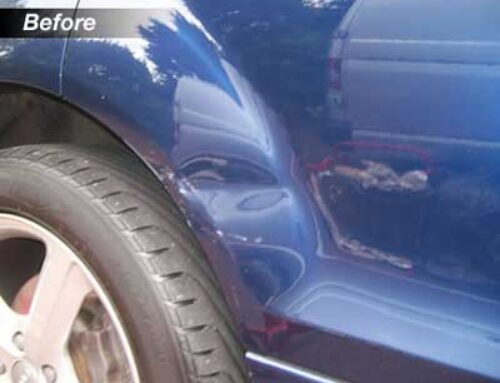
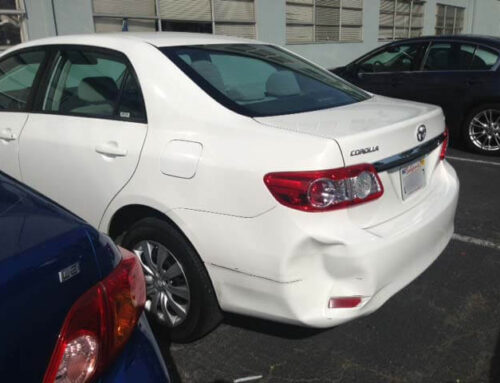
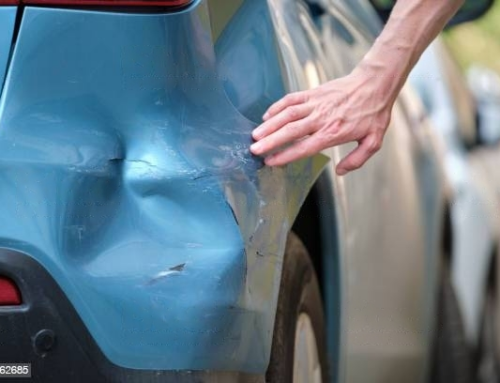
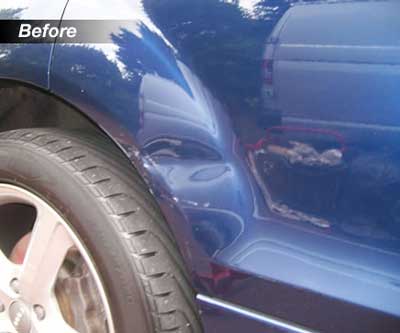
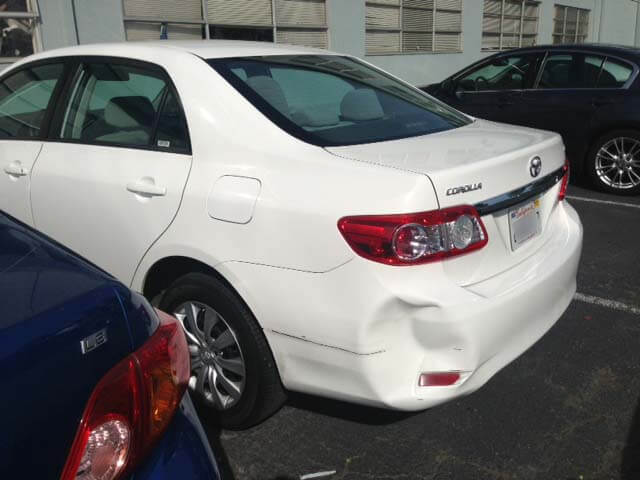
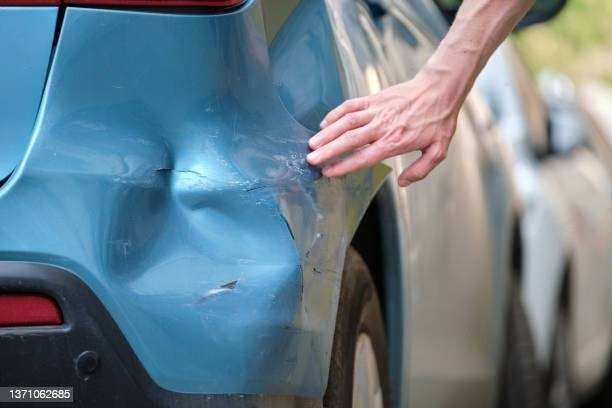
Not all dents are equal, but many common ones are perfect candidates for PDR. Think door dings, hail damage, parking lot mishaps, and light creases.
PDR works best when:
- The paint is unbroken
- The dent isn’t excessively sharp
- The metal hasn’t been severely stretched
- The damage is relatively shallow
- The panel is accessible from behind
What makes PDR so appealing is how little it disrupts the vehicle. Technicians use specialized tools to gently massage the metal back into its original shape. There’s no guesswork involved with paint blending or drying times.
From a customer’s perspective, the appeal is obvious. Repairs are often completed in hours instead of days. There’s less downtime, fewer steps, and a cleaner result. That efficiency is why body shops instinctively check for PDR eligibility first, even if they don’t always explain it upfront.
How does paintless dent repair compare to full body shop repairs?
Traditional body shop repairs are effective, but they’re also more involved. Comparing the two side by side shows why PDR is often preferred.
Paintless Dent Repair
- Keeps original paint intact
- No fillers or repainting
- Faster turnaround
- Lower cost
- Minimal disruption to the vehicle
Traditional Dent Repair
- Requires sanding and filler
- Involves repainting and curing
- Takes longer
- Higher cost
- Risk of color mismatch
Traditional repairs are sometimes necessary, especially for severe damage. But for minor dents, they can feel like overkill.
There’s also the long-term factor. Repainted areas may fade differently over time, especially in harsh weather. PDR avoids that entirely by keeping the factory finish untouched.
That’s why many body shops quietly hope PDR is an option. It leads to happier customers and cleaner results.
When is paintless dent repair preferred over conventional dent repair methods?
PDR is preferred when the goal is to restore the vehicle without altering its original condition. It’s not the right choice for every situation, but when it fits, it’s often the best one.
PDR is usually preferred when:
- Dents are caused by hail or door impacts
- Paint is intact with no cracking or chipping
- The owner wants to maintain resale value
- Insurance claims favor less invasive repairs
- Time and convenience matter
- The vehicle is newer or well-maintained
Body shops and insurers alike recognize that less invasive repairs are often better for everyone involved. That’s why PDR is frequently discussed first, even if it’s not always obvious to the customer.
Knowing this helps drivers ask better questions. Instead of assuming traditional repair is required, asking about PDR can save time, money, and frustration.
Start With the Smartest Repair Option
At Piedmont Dent Repair, we believe the best repair is the one that preserves your vehicle, not just fixes it.
That’s why we focus on paintless dent repair whenever it’s the right fit. We take the time to evaluate damage honestly and recommend solutions that make sense for your car, your schedule, and your budget. Our goal isn’t to upsell repairs you don’t need. It’s to restore your vehicle the right way.
If you’ve noticed dents or dings, let us take a look and see if paintless dent repair can get you back to a clean finish faster than you expect.