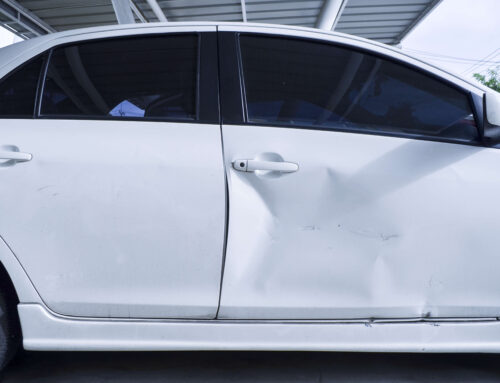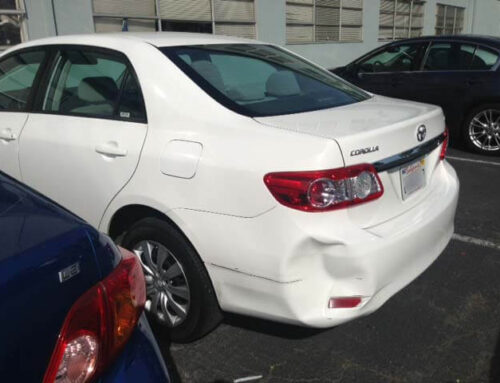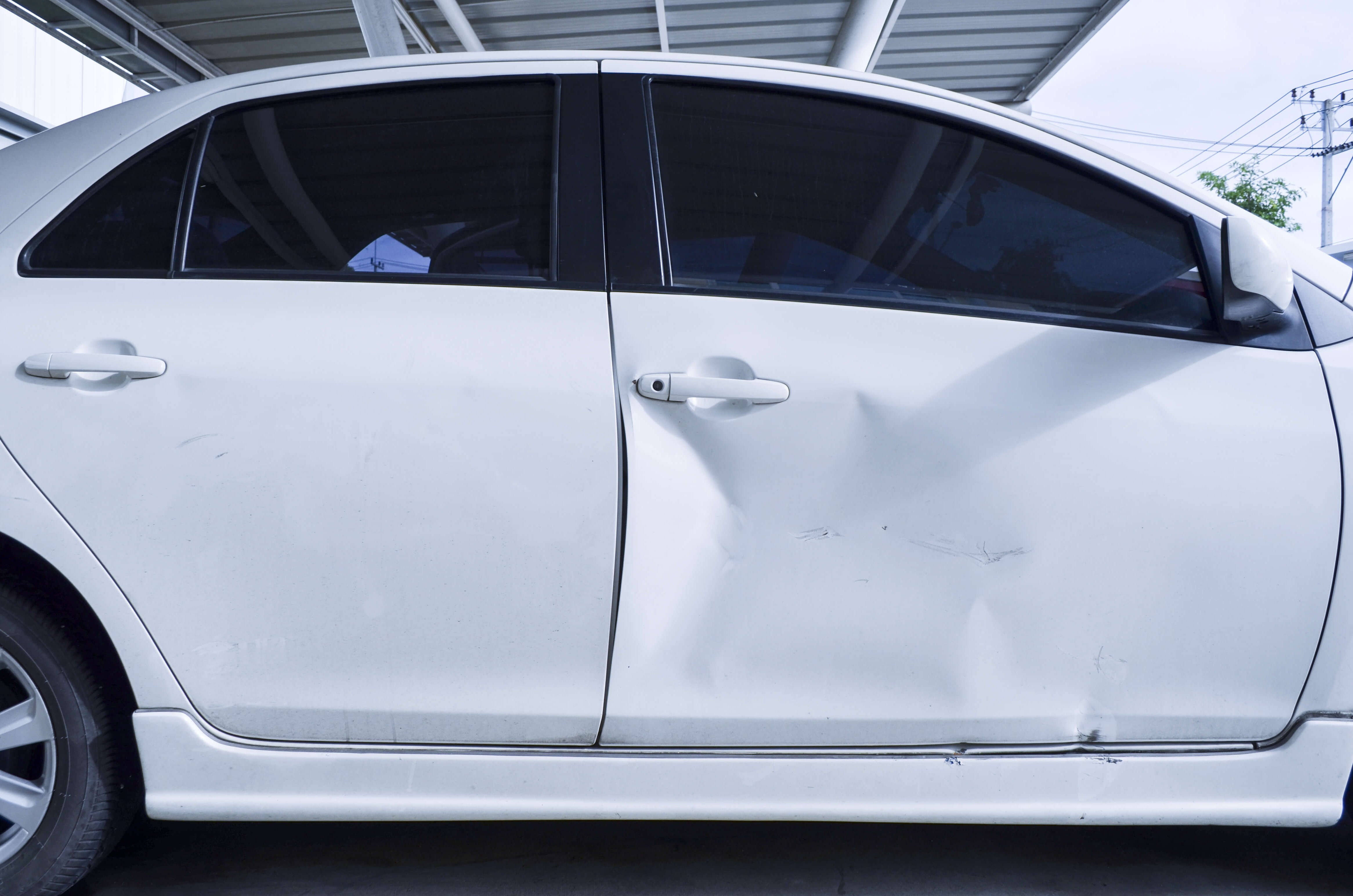
You discover a dent on your car door and start looking into paintless dent repair. It sounds like a good option because it may be possible to remove the dent without sanding, filling, or repainting the panel. But there’s one detail you’re unsure about: that same door was repainted after an earlier repair.
Does that mean paintless dent repair is off the table?
Paintless dent repair on a repainted panel may be possible, but it requires a careful inspection first. Previous bodywork can affect how well the paint adheres to the surface, how the metal responds to reshaping, and which repair methods are appropriate. If the panel contains body filler or has a weak repaint, some PDR techniques may cause additional finish damage.
At Piedmont Dent Repair in Charlotte, NC, we understand that not every vehicle comes to us with its original factory finish. Cars and trucks may have had collision repairs, paintwork, or previous dent removal before the latest damage occurred.
Our job is to look at the dent, consider the condition of the panel, and explain which repair options may be appropriate.
Here’s what you should know about PDR on previously repainted panels and why your vehicle’s repair history matters.
Why Paint History Matters Before a Repair
Paintless dent repair is designed to reshape damaged vehicle panels without the sanding, body filler, and repainting normally involved in conventional bodywork.
When conditions are suitable, a technician can work the metal back toward its original contour while preserving the existing finish.
But the condition of that finish matters.
A panel with original factory paint may behave differently from one that was previously sanded, repaired, and refinished.
Factory Paint and Refinished Paint Aren’t Always the Same
Factory automotive finishes are applied under controlled manufacturing conditions.
When a panel is repainted later, the repair process may involve different materials, surface preparation, application methods, and curing conditions.
A professionally applied repaint can look excellent and remain durable for years.
However, appearance alone doesn’t tell a PDR technician exactly how the refinished layers will respond to pressure, flexing, or exterior pulling.
The adhesion of the paint, condition of the underlying material, and extent of previous bodywork all need to be considered.
A repainted panel isn’t automatically unsuitable for PDR. But the earlier repair introduces additional uncertainty.
Why Previous Paintwork Changes the Risk
During PDR, the technician carefully changes the shape of the dented metal.
That movement also places stress on the finish covering the panel.
If the finish is in good condition and the dent is suitable, it may tolerate the movement.
If the repainted surface has poor adhesion, existing cracks, or weaknesses between layers, the repair could cause paint lifting, chipping, or cracking.
This is particularly important when a technique pulls directly on the exterior surface.
Understanding whether paintless dent repair can damage paint is especially important when a vehicle has previously undergone refinishing.
Before recommending PDR, a technician should evaluate both the dent and the condition of the previous repair.
Does the Age of the Repaint Matter?
It can provide useful context.
A recently refinished panel may not yet have completed the curing period specified by the paint manufacturer or repair facility.
An older repaint may have been exposed to years of heat, sunlight, moisture, and ordinary wear.
Neither age nor appearance alone proves that the finish is suitable for PDR.
If the panel was repainted recently, provide the repair date and any available refinishing information.
A technician may recommend consulting the original repair shop or coating manufacturer’s guidance before attempting further work.
How Filler and Paint Adhesion Influence Options
One of the most important questions about a previously repainted panel is whether body filler was used underneath the finish.
Not all repainting involves filler.
A panel may have been refinished because of scratches, fading, or cosmetic damage without significant reshaping.
Other repairs involve substantial metalwork and filler to restore the panel’s appearance.
Those differences matter when assessing PDR suitability.
Why Does Previous Body Filler Matter?
Body filler is commonly used in conventional collision repairs to smooth certain surface imperfections after the damaged panel has been worked.
Once cured and refinished, the filler becomes part of the repaired surface.
Unlike the underlying sheet metal, filler isn’t designed to bend and recover in the same way during dent manipulation.
If a new dent affects an area containing filler, attempting to reshape the metal underneath can crack or separate that material.
The painted surface may then develop visible damage.
A technician needs to determine whether filler is present near the dent and whether movement of the underlying panel is likely to disturb it.
In some cases, conventional body repair may be more appropriate than PDR.
Can a Repainted Panel Look Fine but Still Be Risky?
Yes.
A panel may appear glossy and uniform while containing underlying repair materials or adhesion problems that aren’t immediately visible.
Possible warning signs include:
-
Existing paint chips or hairline cracks
-
Peeling or lifting around panel edges
-
Unusual changes in surface texture
-
Visible boundaries from an earlier repair
-
Signs of previous sanding or refinishing
-
Evidence of body filler or extensive metalwork
These signs don’t automatically prove that the panel cannot be repaired.
They do provide reasons for a closer inspection.
Even when no visible problems are present, a technician cannot guarantee that a previous repaint will tolerate every PDR method.
What About Paint Thickness?
Paint thickness measurements may help a technician identify areas that differ from the surrounding factory finish.
For example, substantially different readings across a panel may suggest prior refinishing or filler, depending on the instrument and materials.
However, a paint thickness gauge doesn’t independently prove that a repaint has strong adhesion.
Nor can every type of gauge accurately evaluate every panel material or coating arrangement.
Measurements should be interpreted alongside visual inspection, repair history, and the technician’s experience.
Can Large Dents Be Repaired on Repainted Panels?
Dent size is only one factor.
A broad, shallow dent may sometimes be easier to reshape than a smaller, sharp crease.
Depth, stretched metal, body lines, panel edges, underlying repairs, and finish condition all influence repairability.
When discussing large dent removal, a technician needs to consider whether the metal can be moved without creating unacceptable damage to the finish or previous bodywork.
A large dent on a repainted panel may require conventional repair even when a similarly sized dent on an original-finish panel would be suitable for PDR.
That’s why a quote based only on dent diameter may not tell the whole story.
Inside Access Versus Exterior Pulling
Paintless dent repair technicians generally use two broad approaches to move dented metal.
One involves working from behind the damaged panel with specialized tools.
The other uses controlled exterior pulling techniques.
Both can be useful under suitable conditions, but previous repainting affects the risk assessment.
How Backside PDR Works
When the back of the dent is accessible, a technician may use specialized rods or other tools to apply carefully controlled pressure to the underside of the panel.
The repair is performed gradually while the technician monitors the metal’s shape using appropriate lighting and reflections.
This approach avoids attaching pulling tabs directly to the exterior finish.
For a repainted panel, that may eliminate one particular source of risk associated with adhesive pulling.
However, backside access doesn’t guarantee that the repair will preserve the repaint.
The finish and any underlying filler still need to tolerate the movement of the metal.
Why Panel Access Matters
Some dents are located behind braces, reinforcement structures, or other components that limit tool access.
A door dent may be easier to reach from behind in one location than another.
Damage near a reinforced section or narrow panel edge can be more difficult.
During a car door dent repair assessment, the technician considers whether the metal can be reached and controlled without damaging surrounding vehicle components.
Access should not be created by unnecessarily cutting, drilling, or altering structural parts.
If the area can’t be safely reached, the technician may need to consider another approach.
Can Glue Pulling Damage a Previous Repaint?
Yes.
Exterior glue pulling uses specially designed adhesive tabs attached to the panel’s painted surface.
The technician applies controlled pulling force to lift selected areas of the dent.
On an original, sound finish, this can be an appropriate method for certain dents.
On a previously repainted panel, however, the adhesive bond and pulling forces may lift or separate refinished paint if the coating is poorly adhered or otherwise vulnerable.
This can result in visible finish damage that requires repainting.
Even a repaint that looks intact may have uncertain adhesion.
For that reason, technicians often treat glue pulling on repainted panels as a higher-risk procedure and may decline it.
Is Backside Access Always the Better Choice?
Not automatically.
Backside access avoids pulling directly on the exterior paint, but the underlying repair condition still matters.
If body filler is present, even carefully controlled metal movement may damage it.
If the dent has sharp creases, severely stretched metal, or existing paint fractures, the panel may not be suitable for paintless repair.
A technician should assess the likely outcome, available access, and associated risks before recommending a technique.
Sometimes the responsible decision is to recommend conventional repair rather than attempting PDR.
What to Disclose About Earlier Repairs
If your car has been repainted, telling the technician about it is one of the most helpful things you can do.
You don’t need to know every technical detail.
Even basic information about previous bodywork can improve the assessment.
Tell the Technician Which Panel Was Repaired
Start by identifying the panel and what happened.
For example:
“My driver’s door was repainted after a parking lot accident two years ago. I don’t know whether body filler was used, but the new dent is close to the area that was repaired.”
That gives the technician useful context.
Mention whether the previous work involved a collision, dent repair, scratch repair, or full-panel repaint.
Also explain whether the new dent occurred in the same location or a different part of the panel.
Bring Previous Repair Records When Available
If you have an invoice or repair estimate from the earlier body shop, it may identify:
-
Which panels were refinished
-
Whether body filler or metal repair was performed
-
Whether any parts were replaced
-
What refinishing materials or procedures were used
-
The date of the previous repair
-
Any applicable repair warranty
These details can help clarify the panel’s history.
If you don’t have records, that’s okay.
Tell the technician what you know and be clear about what you’re unsure of.
Should You Mention Small Touch-Ups?
Yes.
A small repaint or localized refinishing job may affect a different area than a complete panel repaint.
If the dent overlaps a spot repair, the technician should know.
Even if the vehicle was refinished before you purchased it, explain any signs of previous bodywork you’ve noticed.
You aren’t expected to diagnose the finish yourself.
The important thing is to avoid assuming that a previously repaired panel is identical to one with its original factory coating.
Ask About Paint Risk Before Authorizing Work
Before a repair begins, ask the technician what could happen to the existing finish.
Useful questions include:
-
Does the panel appear to have previous filler?
-
Is the repaint showing signs of weakness?
-
Can the dent be accessed from behind?
-
Would glue pulling be required?
-
What happens if the finish cracks or lifts?
-
Is conventional body repair a better option?
-
What outcome is reasonably achievable?
These conversations can help you compare repair options with realistic expectations.
At Piedmont Dent Repair, we believe customers should understand the limitations of a proposed repair before making a decision.
Choosing a Repair Plan After Inspection
Once the technician has inspected the dent and finish, the next step is to decide which repair approach is appropriate.
There isn’t one answer for every repainted panel.
Some may still be candidates for PDR, while others are better suited to conventional body repair.
When Paintless Dent Repair May Still Be Considered
PDR may be worth considering when the dent is suitable, the finish appears stable, there is no problematic underlying filler in the working area, and the technician has an appropriate way to access and reshape the panel.
The technician also needs to consider panel material, dent location, and the likelihood of damaging previous repairs.
Even when these conditions appear favorable, previous repainting introduces uncertainty.
An inspection can help assess risk, but it cannot guarantee that the finish will remain unaffected.
When Conventional Dent Repair May Be Appropriate
Traditional body repair may be recommended when the dent involves cracked paint, extensive filler, sharply damaged metal, or another condition that makes paintless methods unsuitable.
Conventional repair may involve restoring the panel’s shape, preparing the surface, applying appropriate repair materials, and refinishing the affected area.
If repainting is necessary, matching the existing finish becomes an important part of the process.
Our article about paint matching explains the considerations involved when a damaged panel needs refinishing.
The appropriate repair should be based on the panel’s condition rather than an assumption that avoiding paint is always the best outcome.
Why an Inspection Is Better Than Guessing From Photos
Photos can provide helpful information about a dent’s size, shape, and location.
However, they may not reveal weak paint adhesion, hidden filler, or limitations behind the panel.
Lighting and camera angles can also make damage appear shallower or deeper than it is.
For that reason, a technician may need an in-person inspection before confirming PDR suitability on a previously repainted panel.
At Piedmont Dent Repair, we offer professional paintless dent removal in Charlotte and evaluate factors that influence whether a dent can be repaired.
Tell us about any earlier bodywork when requesting an assessment.
What About Repair Cost and Time?
A previous repaint can make a repair more complicated, but that doesn’t mean every repainted panel will cost more.
Pricing depends on the dent’s condition, repair access, panel material, and the method selected.
If conventional refinishing is necessary, the process and cost may differ from a suitable paintless repair.
Rather than relying on a general price estimate, ask for a quote based on the actual damage.
You should also confirm which work is included and whether any additional steps could be necessary.
A responsible estimate should reflect the realistic repair plan without promising results that the panel’s condition cannot support.
Frequently Asked Questions About PDR on Repainted Panels
Can PDR Be Performed on a Repainted Panel?
Sometimes. A repainted panel may still be suitable for paintless dent repair if the finish and underlying materials can tolerate the required metal movement. However, previous repairs can increase the risk of cracking, lifting, or other finish damage. A technician should inspect the panel before recommending PDR.
Why Does Prior Body Filler Matter for Dent Repair?
Body filler doesn’t respond to metal reshaping in the same way as the underlying sheet metal. Moving a previously repaired area can cause filler to crack or separate, potentially damaging the paint above it. The technician needs to assess whether filler is present and whether the dent overlaps that area.
Can Glue Pulling Damage a Previous Repaint?
Yes. Glue pulling applies force through adhesive tabs attached to the exterior finish. If the repaint has weak adhesion or another underlying problem, the pulling action may lift or damage the coating. A technician may recommend a different approach or advise against PDR when the risk is too high.
How Should I Disclose Previous Bodywork?
Tell the technician which panel was repaired, approximately when the work occurred, and whether you know if filler or repainting was involved. Bring previous repair records if available. If you don’t know the full history, explain what you do know rather than guessing.
Is PDR Safer From Behind the Panel?
Backside PDR avoids attaching adhesive pulling tabs directly to the exterior paint, which can reduce one particular risk for repainted surfaces. However, moving the metal can still stress the finish or underlying filler. The safest appropriate technique depends on the dent and the panel’s condition.
Does a Previously Repainted Car Door Need Traditional Repair?
Not always. Some car door dents on repainted panels may still be suitable for PDR after inspection. Others may require conventional bodywork because of finish damage, filler, difficult access, or dent severity. A professional assessment helps determine which method is reasonable.
Have a Dent on a Repainted Panel? Contact Piedmont Dent Repair in Charlotte
A previous repaint doesn’t automatically mean your vehicle needs another full body repair.
But it does mean the dent should be evaluated carefully before any paintless repair technique is attempted.
At Piedmont Dent Repair, we help Charlotte-area vehicle owners understand their dent repair options and the factors that affect repairability.
Whether your car has a small door ding, a dent near a previous collision repair, or a larger area of damage, we can discuss the condition of the panel and whether PDR may be appropriate.
Our team specializes in paintless dent repair, with mobile service options in Charlotte and surrounding communities. Specific availability and repair suitability are confirmed during the assessment.
If your vehicle has been repainted, let us know when you contact us. That information helps us evaluate the repair with the right expectations from the start.
Learn more about our professional paintless dent removal services or call Piedmont Dent Repair at (704) 477-0995 to ask about an assessment.
Let’s look at the dent, review the previous paintwork, and determine which repair option makes the most sense for your vehicle.