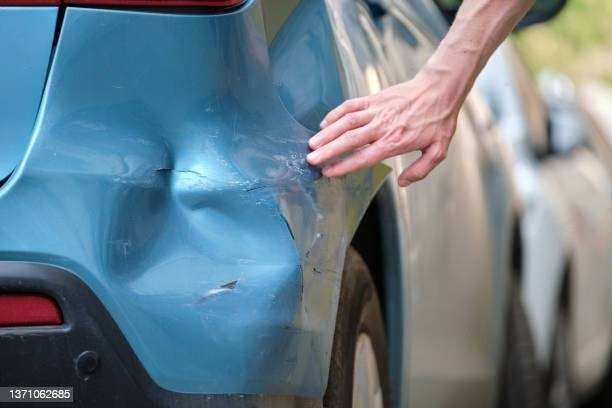
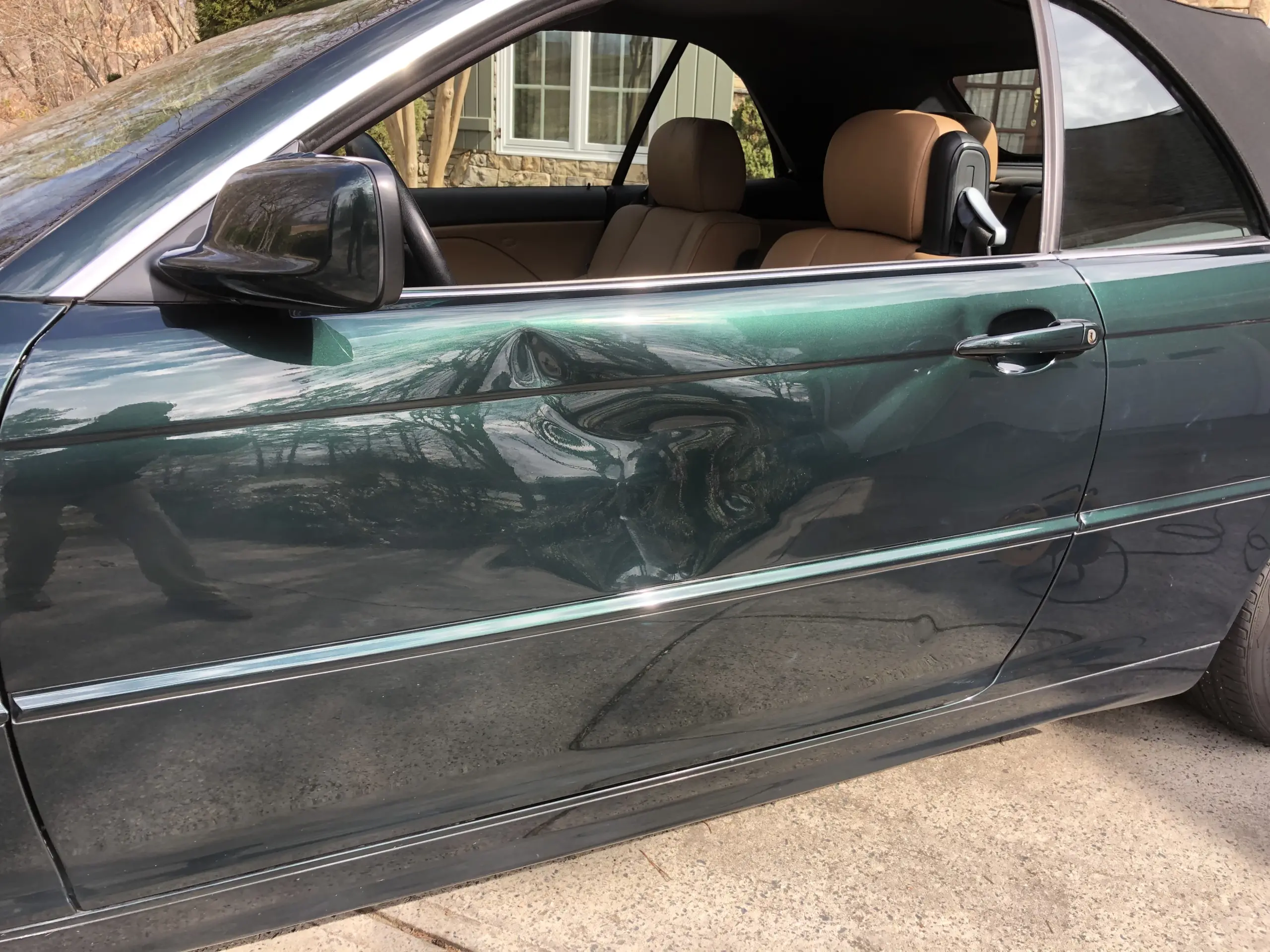
A dent in your car can be frustrating. Whether it’s caused by a shopping cart in a parking lot, falling debris, or a minor bump, dents can affect both the appearance and value of your vehicle. The good news is that many small dents can be repaired with simple do-it-yourself techniques, while larger damage can be handled by professionals using modern repair methods.
Why Car Dent Repair Matters
Even a small dent can cause bigger problems if ignored. Aside from making your vehicle look damaged, dents can affect the protective paint layer. Once the paint is compromised, moisture can reach the metal and cause rust.
Repairing dents early helps:
- Maintain the vehicle’s appearance
- Protect the body panels from corrosion
- Preserve resale value
- Prevent further structural damage
In many cases, repairing a dent soon after it happens is cheaper than waiting until the damage worsens.
How Cars Get Dented
Car dents are surprisingly common. Even careful drivers experience them at some point.
Common Causes of Car Dents
Some of the most common causes include:
- Hailstorms that strike exposed vehicles
- Shopping carts or car doors hitting your vehicle in parking lots
- Road debris such as rocks or gravel
- Falling branches or objects
- Minor accidents or fender benders
Because vehicles are exposed to the environment and daily traffic, small dents and dings are almost unavoidable over time.
Types of Car Dents and Damage
Not all dents are the same. The type and severity of the dent will determine how it can be repaired.
What Is the Difference Between a Dent and a Ding?
Although people often use the terms interchangeably, there is a small difference.
- Dings are small dents that usually do not damage the paint.
- Dents are larger and may involve deeper metal deformation or paint damage.
Common Types of Car Dents
- Dings
Small and shallow dents, usually caused by door impacts or light debris.
- Round dents
Circular indentations that can sometimes be popped back into place.
- Sharp dents
Deeper dents with a more pointed impact area.
- Crease dents
Long folds or creases along the panel, often caused by significant impact.
- Large or structural dents
Severe damage that may affect the vehicle’s body panels or frame.
Understanding the type of dent helps determine whether it can be repaired at home or requires professional help.
10 DIY Ways to Fix Minor Car Dents
If the dent is small and the paint is still intact, you may be able to fix it yourself using simple tools.
Plunger Method
A household plunger can sometimes pop out a small dent. Wet both the plunger and the dented area, then pull repeatedly until the dent pops back into place.
Hot Water Method
This works best on plastic bumpers. Pour hot water over the dent to soften the plastic, then push the dent outward from behind.
Hair Dryer and Compressed Air
Heat the dented area with a hair dryer, then spray compressed air over it. The sudden temperature change may cause the dent to pop out.
Toothpaste for Light Scratches
Whitening toothpaste contains mild abrasives that can reduce the appearance of small scratches.
Magic Erasers
These cleaning sponges can remove scuffs and marks from the surface of your vehicle.
Dent Repair Kits
Automotive stores sell dent repair kits that include suction tools, glue tabs, and pullers designed to remove dents.
Nail Polish Touch-Ups
Matching nail polish can temporarily cover small paint chips until you get a professional repair.
Wax and Grease Remover
Before applying any repair products, cleaning the area helps prevent dirt or debris from damaging the paint.
Clay Bar Treatment
Clay bars can remove paint overspray and small surface contaminants.
Knowing When DIY Isn’t Enough
If the dent is deep, involves paint damage, or sits along a body crease, professional repair is usually the better option.
How to Repair Plastic vs. Metal Car Dents
The material of your car’s body panel affects the repair process.
Repairing Plastic Bumper Dents
Plastic bumpers are flexible, which makes them easier to fix. Heat softens the plastic so it can be pushed back into shape.
Fixing Metal Body Panel Dents
Metal panels require tools such as suction pullers or dent bridge systems that slowly pull the metal outward.
Using Dent Pullers
Dent pullers attach to the damaged area and allow controlled pressure to restore the panel to its original shape.
Using Body Filler to Repair Car Dents
Sometimes a dent cannot be completely removed. In these cases, body filler may be used.
What is Body Filler?
Body filler is a putty-like material used to smooth dents before repainting. It fills in low spots and restores the panel’s shape.
Basic Process for Using Body Filler
- Clean the damaged area
- Sand away paint around the dent
- Apply filler and shape the surface
- Sand the filler smooth
- Apply primer and paint
This method is commonly used in auto body shops when dents cannot be fully popped out.
What is Paintless Dent Repair (PDR)?
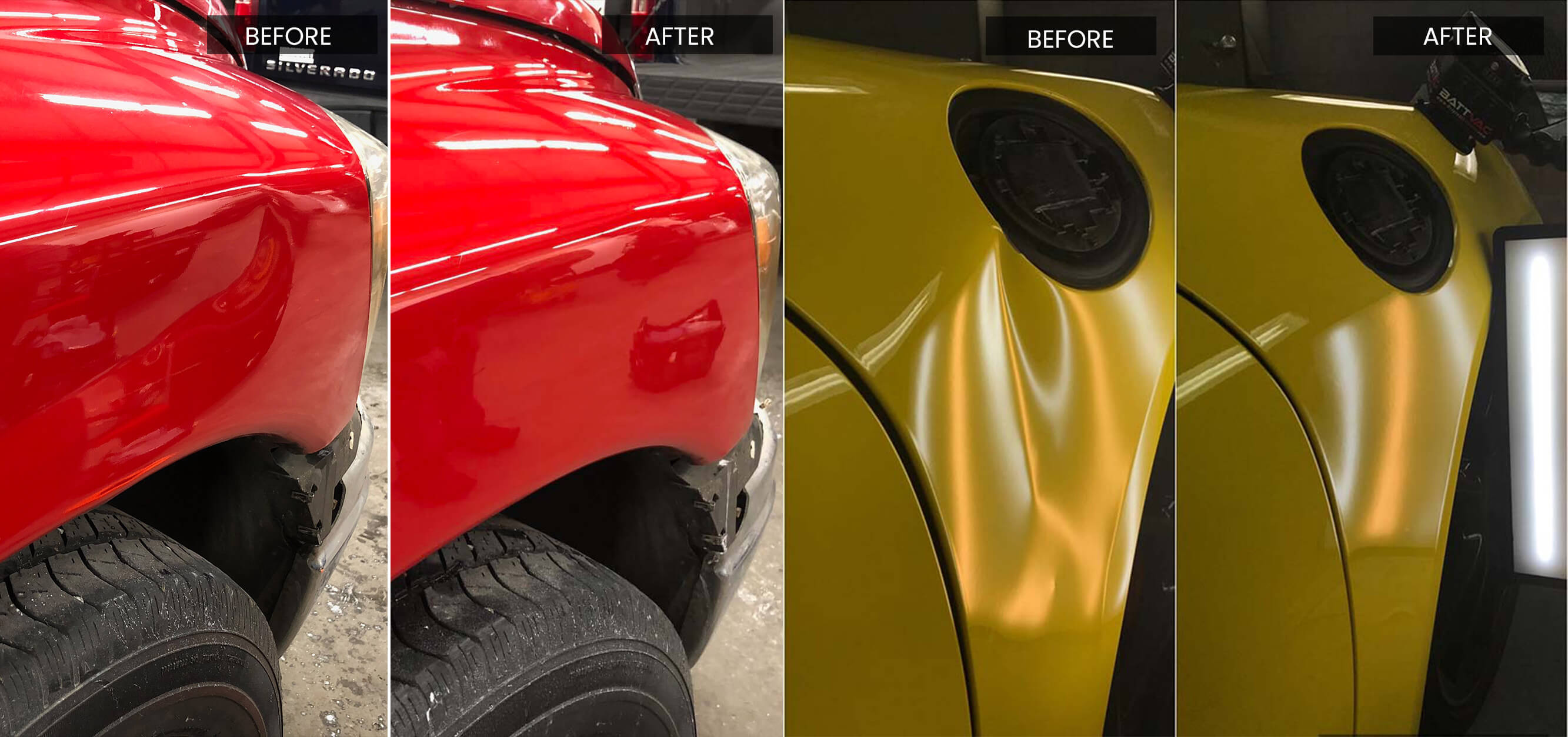
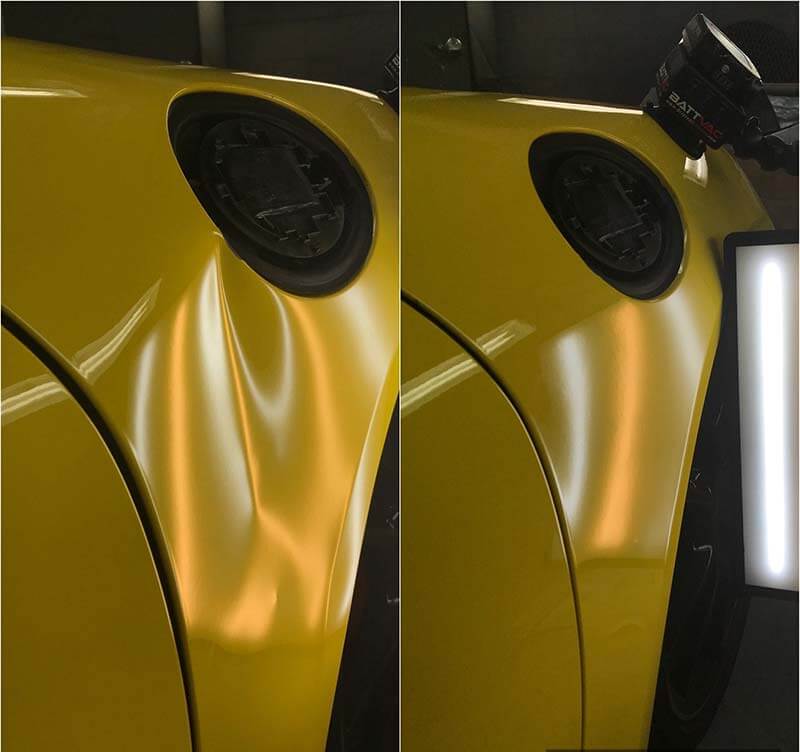
Paintless dent repair is a modern technique that removes dents without repainting the vehicle.
Technicians use specialized tools to push the metal back into place from behind the panel.
Advantages of Paintless Dent Repair
- Preserves the original paint
- Faster than traditional repairs
- More affordable
- Maintains the vehicle’s factory finish
Because it does not involve sanding or painting, PDR can often be completed within a few hours.
What Paintless Dent Repair Can and Cannot Fix
Damage Suitable for PDR
Paintless dent repair works well for:
- Hail damage
- Parking lot dents
- Door dings
- Minor collision dents
- Small body panel dents
Damage That Requires Traditional Repair
Some dents cannot be repaired using PDR, including:
- Deep dents with stretched metal
- Creased panels
- Paint damage or cracking
- Large collision damage
In these cases, sanding, filling, and repainting are required.
How Much Does Dent Repair Cost?
Dent repair costs depend on the severity of the damage and the repair method.
DIY Dent Repair Costs
Most DIY dent repair tools cost between $20 and $100.
Paintless Dent Repair Pricing
Typical PDR costs include:
- Small dents: $50 to $125
- Medium dents: $75 to $300
- Larger dents: $300 to $500
- Extensive hail damage: up to $2,500
Auto Body Shop Repair Costs
Traditional repairs involving paint work can range from $1,000 to $2,000 or more, depending on the damage.
Factors That Affect Dent Repair Costs
- Size and depth of the dent
- Location on the vehicle
- Number of dents
- Type of material (steel, aluminum, or plastic)
- Paint damage
Should You Fix a Dent Right Away?
It is usually best to repair dents as soon as possible.
Prompt repair can:
- Prevent rust and corrosion
- Protect your car’s paint finish
- Maintain resale value
- Avoid larger repair costs later
Ignoring dents may allow moisture to penetrate the metal, which can lead to paint peeling and rust formation.
Frequently Asked Questions About Car Dent Repair
Can small car dents be fixed at home?
Yes. Small dents and dings can often be repaired with DIY techniques such as plungers, dent pullers, or heating and cooling methods.
Does boiling water really fix car dents?
Boiling water can help repair dents in plastic bumpers because heat softens the plastic, making it easier to reshape.
How much does paintless dent repair cost?
Most paintless dent repairs range from $75 to $500, depending on the size and location of the dent.
Will insurance cover dent repair?
Comprehensive insurance typically covers dent repairs caused by hail, falling objects, or other non-collision incidents.
Can a plunger remove a dent from a car?
A plunger may work on shallow dents by creating suction that pulls the dent outward.
How long does paintless dent repair take?
Most PDR jobs can be completed in one to two hours, depending on the severity of the dent.
Is it cheaper to repair or replace a dented panel?
In many cases, repairing the dent is cheaper. However, if the damage is severe, replacing the panel may be more cost-effective.
Can dents damage a car’s paint or cause rust?
Yes. If the paint is cracked or chipped, moisture can reach the metal and cause rust.
Does dent repair affect resale value?
Repairing dents usually improves resale value by restoring the vehicle’s appearance.
What size dent can paintless dent repair fix?
PDR can fix dents from small dings to several inches wide, as long as the paint remains intact.
Repairing dents quickly helps keep your car looking great and protects it from long-term damage. While DIY methods can solve minor issues, professional repairs offer the best results when dents are larger or involve paint damage. By understanding your repair options, you can choose the most effective solution for restoring your vehicle’s appearance.