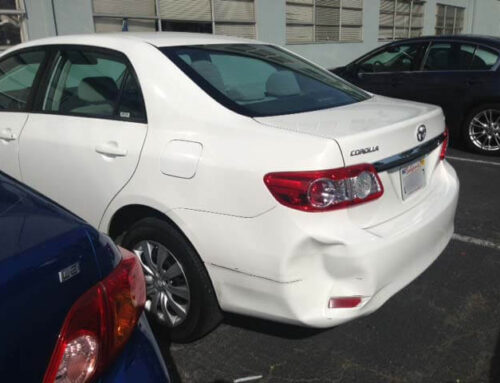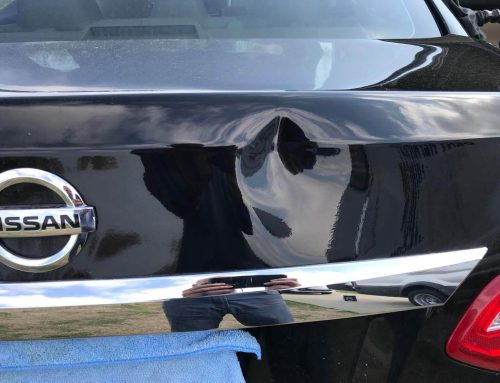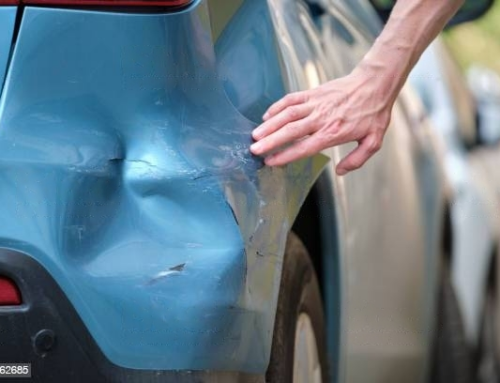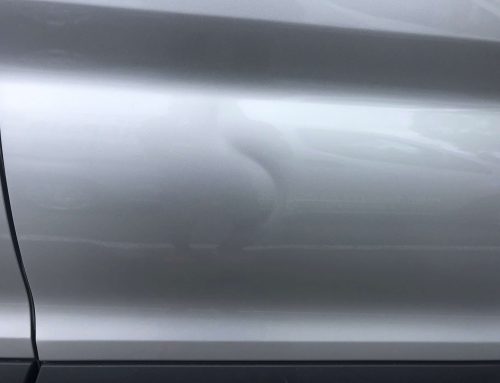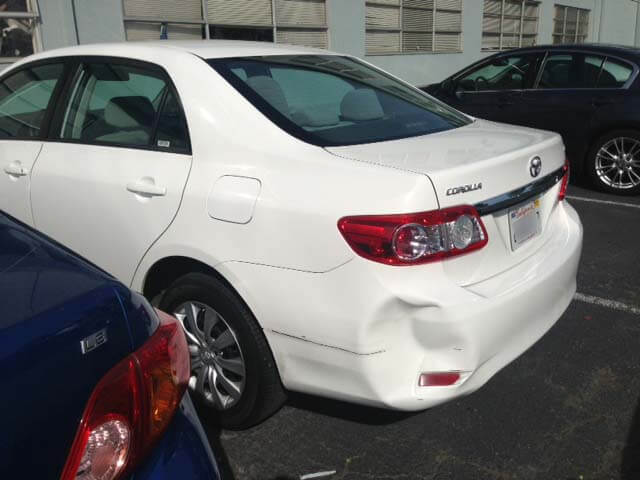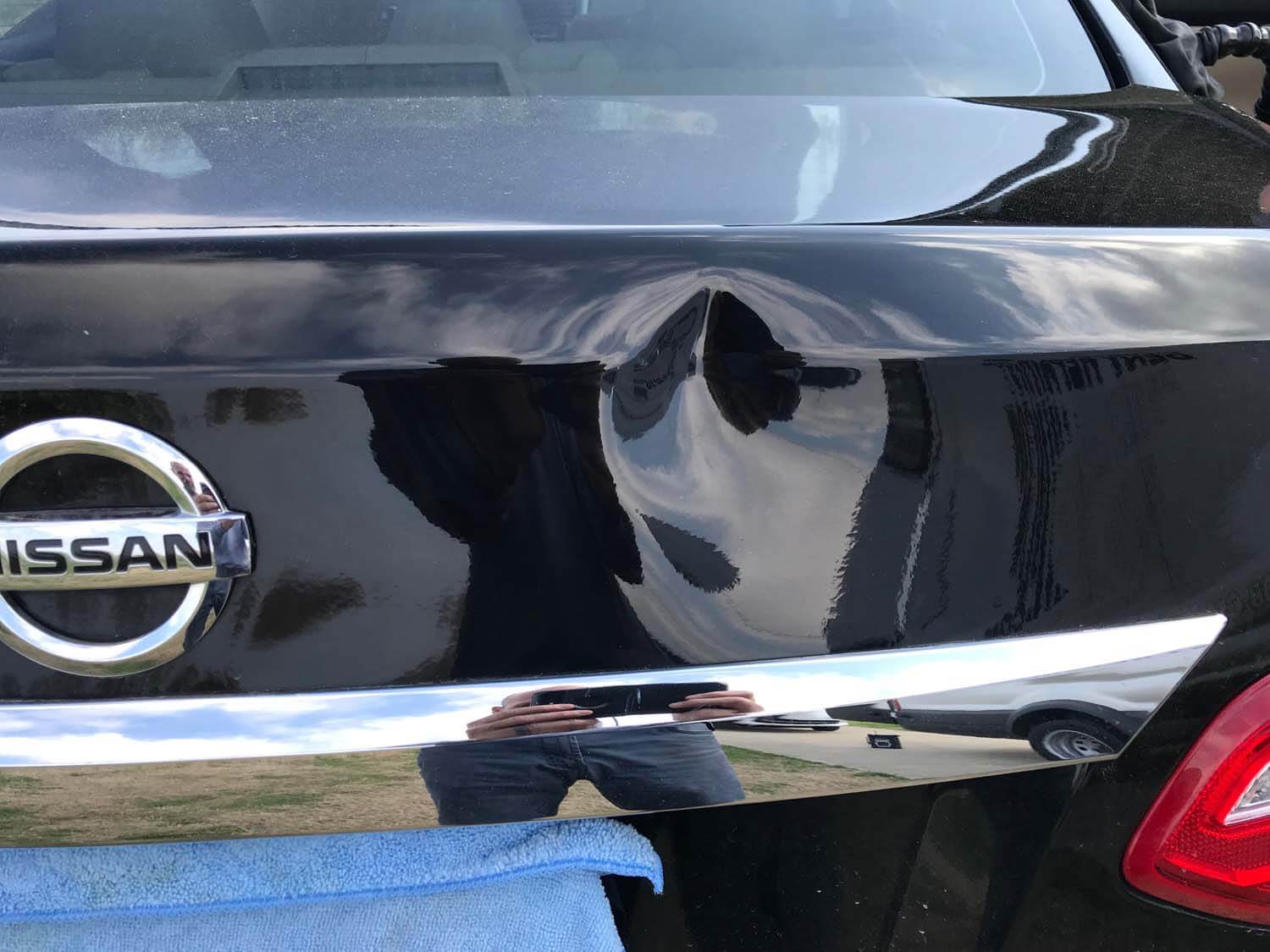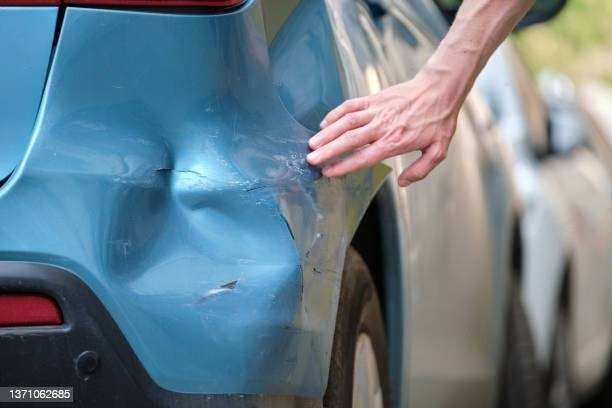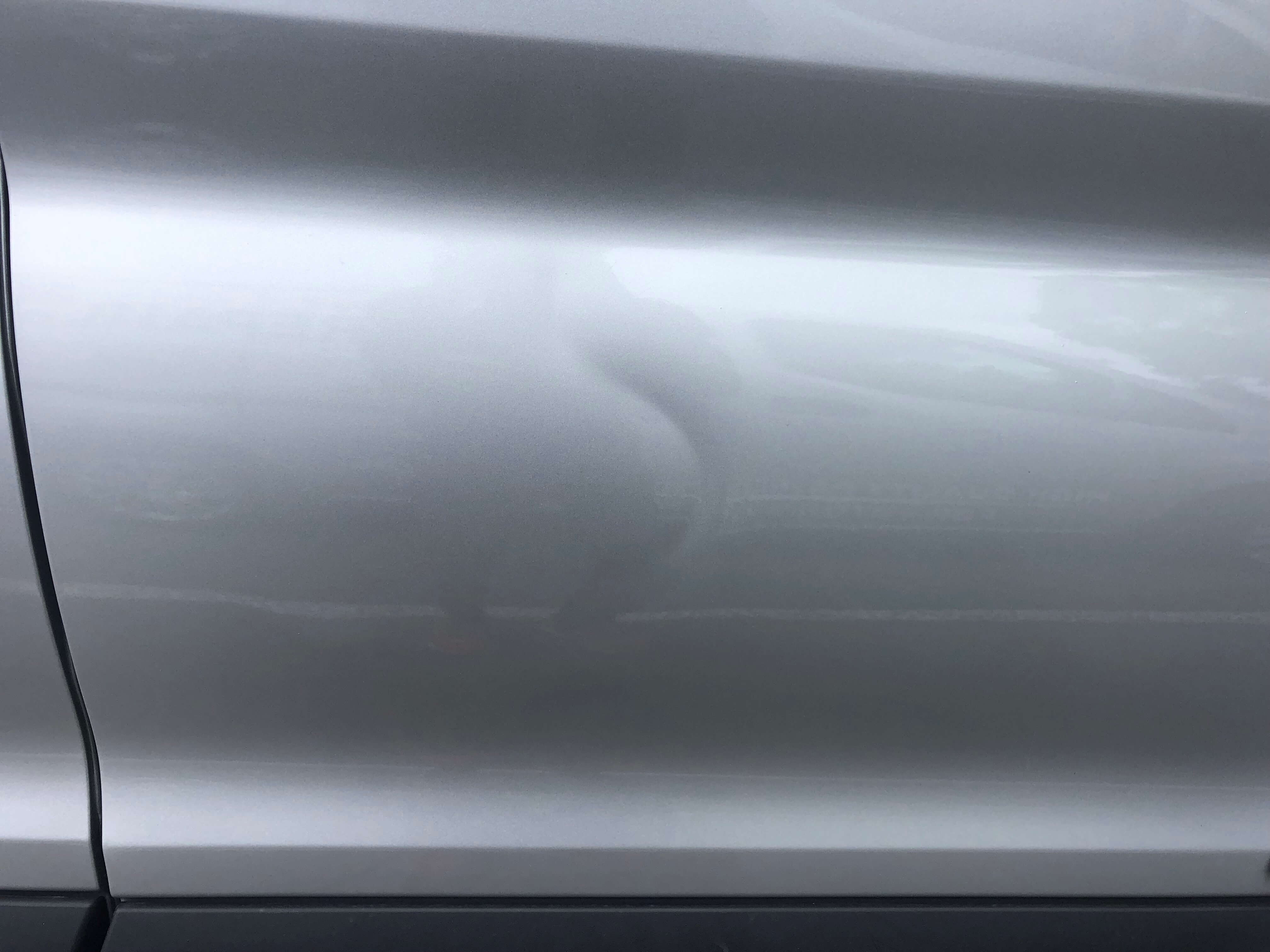
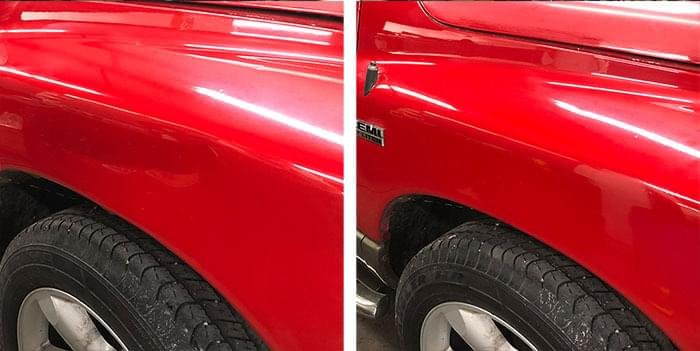
A dent on a car door body line may qualify for paintless dent repair when the finish is intact and the metal can be reshaped safely. The technician must evaluate the sharpness of the dent, panel reinforcement, and access. A body line alone does not automatically require repainting.
However, body-line dents can be more challenging than dents on flatter sections of a door. These stamped contours give the panel its shape and character, which means restoring them requires careful control of the metal. The condition of the paint, depth of the damage, location of internal braces, and available tool access can all influence whether car door body line dent repair can be completed without conventional bodywork.
For drivers in Charlotte and surrounding communities, a professional assessment is usually the best way to find out whether the original finish can be preserved.
What Makes a Door Body Line Dent Different?
A body line is a defined contour pressed into a vehicle panel during manufacturing. Some lines are subtle curves, while others form sharp ridges that run horizontally or diagonally through a door. Beyond contributing to the vehicle’s appearance, these contours change how the sheet metal reacts when it is struck.
When another car door, shopping cart, road debris, or another object hits a flat portion of a door, the impact may create a relatively simple low spot. When the same impact lands directly on a body line, the force can distort both the dented area and the surrounding contour.
That makes car door body line dent repair more precise. The technician is not simply trying to raise a low spot. The original line, adjacent panel shape, reflections, and surface tension all need to be restored together.
Can PDR Fix a Dent on a Body Line?
Yes, PDR can often fix a dent on a body line, but the location alone does not determine whether the repair is possible.
A technician typically looks at several factors:
- How deep the dent is
- Whether the body line has been sharply folded
- How much metal has moved around the impact
- Whether the panel appears stretched
- Whether the original paint is still firmly attached
- Whether the damage can be reached safely with appropriate tools
- Whether the panel has previous repairs or refinishing
Body-line repairs can require many small, controlled adjustments rather than one large push. The technician may gradually manipulate the affected metal while monitoring reflections across the panel to rebuild the original contour.
A shallow dent crossing a body line with undamaged factory paint may be an excellent candidate for paintless dent repair. A very sharp impact that has severely stretched the metal or damaged the finish may require a different approach.
Drivers comparing repair options can learn more about Piedmont Dent Repair’s approach to professional paintless dent removal.
Why Does a Body Line Dent Need Closer Inspection?
Body lines can hide the true severity of damage.
A dent might look small when viewed directly but reveal a much larger distorted area when seen under proper PDR lighting. The impact can push the central line inward while creating subtle high spots around it.
The technician also has to consider how the panel was originally stamped. The metal along a strong contour may resist movement differently from the surrounding door skin.
This is why photographs taken from several angles are more useful than one straight-on picture. Shadows and reflections can reveal whether the original body line has simply moved inward or whether the metal has been sharply folded.
Body-line damage can sometimes resemble a crease, but the two are not automatically the same. For more detail on that type of damage, see Can Paintless Dent Repair Fix a Dent With a Crease?.
How Paint Condition Affects Repair Options
One of the most important considerations in any pdr dent repair assessment is the condition of the vehicle’s finish.
Paintless dent repair is designed to reshape the panel while retaining the existing paint. If the finish remains intact and flexible enough to tolerate controlled metal movement, PDR may allow the technician to correct the dent without sanding, filler, primer, or repainting.
That does not mean every dent with intact paint automatically qualifies.
The technician still has to determine whether the metal can be returned safely to its original shape. Nevertheless, good paint condition is an important starting point.
Does a Sharp Door Dent Always Need Repainting?
No. A sharp dent does not automatically need repainting.
Some relatively sharp dents can still be corrected using PDR when the paint has not cracked and the metal has not been excessively stretched. The technician’s ability to gradually restore the shape is more important than simply describing the dent as “sharp.”
The opposite can also be true. A relatively small dent may require conventional refinishing when the impact has chipped, cracked, or otherwise damaged the paint.
Important warning signs include:
- Visible paint cracking
- Chipped areas exposing underlying material
- Scratches that penetrate the finish
- Paint separating around the impact
- Evidence that the panel was previously filled or repainted
Previously refinished panels require extra attention because aftermarket paint may respond differently from the original factory finish during metal movement.
A proper car door dent repair assessment therefore examines both the shape of the metal and the condition of its surface.
What If the Dent Is Large but the Paint Is Intact?
Size matters, but it is not the only factor.
Some broad, shallow dents can respond well to large dent removal techniques because the metal has moved gradually across a wider area rather than folding sharply at one point.
A smaller but extremely deep dent positioned directly on a crisp body line may actually require more precision.
Technicians typically consider depth, shape, location, metal stretch, paint condition, and access together. Piedmont Dent Repair’s own FAQ similarly identifies factors such as depth, size, location, vehicle year, and type of damage as considerations in paintless dent repair.
This is one reason estimates based only on diameter can be misleading. Two dents of the same apparent size may require completely different amounts of work.
How Door Braces and Access Affect the Repair
The outside of a car door may look like one simple panel, but the structure behind it can be more complicated.
Doors often contain internal reinforcement, window mechanisms, wiring, intrusion beams, mounting points, and other components. These structures can affect whether a technician can place a PDR tool directly behind the damaged section.
For car door body line dent repair, access can be especially important because restoring a stamped contour requires precise pressure at specific points.
Can a Technician Reach Behind Every Car Door Dent?
No. Direct access behind every dent is not guaranteed.
The exact layout varies by vehicle. A reinforcement brace may run directly behind the body line, or the dent may sit near an edge where standard tool access is restricted.
The presence of a brace does not necessarily make PDR impossible. Experienced technicians may have several repair strategies available depending on the panel and damage.
For example, they may be able to work around structural components using specialized tools. In suitable cases, controlled glue-pulling techniques may also allow work to be performed from the exterior rather than directly behind the dent.
The appropriate method depends on the vehicle, panel material, paint condition, and damage itself.
Removing trim or gaining access through an existing opening may sometimes be part of the process. However, unnecessary disassembly should not be assumed until the technician has examined the door construction.
Why Is Access Especially Important on a Body Line?
Body-line restoration depends on accuracy.
A technician correcting a flatter dent may have a broader area in which to manipulate the panel. A body line gives much less room for error because the repaired contour has to visually match the shape before and after the damaged area.
Applying too much pressure in one location can create a high spot. Working too aggressively can also make the metal harder to control.
The goal is therefore gradual refinement rather than simply forcing the dent outward.
Good access gives the technician more control over where pressure is applied. Restricted access may make the repair slower, more complicated, or unsuitable for a fully paintless method.
This is another reason two visually similar door dents can receive different recommendations after inspection.
When Conventional Bodywork Is More Appropriate
Paintless dent repair can preserve the existing finish when the damage is suitable, but it is not the correct method for every door dent.
Conventional bodywork may be more appropriate when repairing the metal alone would not provide a satisfactory or safe result.
Situations that may point toward conventional repair include severely damaged paint, significant metal stretching, torn or punctured panels, extremely sharp deformation, or damage involving areas that cannot be restored adequately through PDR.
Previous repairs can also affect the recommendation. If a panel already contains body filler or has been refinished, manipulating the metal can carry different risks than working with untouched factory paint.
What Happens When the Metal Is Too Stretched?
A dent forms because metal has been displaced. In many PDR-suitable dents, the technician can gradually guide that metal back toward its original position.
More severe impacts may stretch the metal beyond what can be corrected predictably through paintless methods alone.
Possible signs of substantial deformation include a very deep center, severely distorted body line, large surrounding crowns or high spots, or a panel that no longer responds normally to controlled manipulation.
The technician must decide whether attempting additional PDR would improve the panel or simply introduce new distortion.
When Is Repainting the Better Choice?
Repainting becomes more likely when the existing finish has already failed.
If a collision has cracked paint across the body line or removed material from the surface, restoring the shape alone cannot repair the finish. Conventional body repair may allow the damaged metal and coating to be addressed together.
The same principle applies when a panel has damage beyond the practical limits of pdr dent repair.
Choosing conventional repair in these situations does not mean PDR failed. It means the damage requires a different process.
Anyone trying to determine where that line falls can also review What Dents Cannot Be Fixed With Paintless Dent Repair? for a broader look at situations that can limit PDR.
Should You Try to Push a Body Line Dent Out Yourself?
Body-line dents are poor candidates for experimentation.
A dent may appear to need one firm push from behind, but metal rarely moves that simply. Applying pressure in the wrong location can create raised areas, distort the stamped contour, or concentrate force at the center of the dent.
Heat, suction devices, improvised tools, and aggressive glue pulling can also affect the paint or make the final professional repair more difficult.
This is particularly relevant for late-model, leased, high-value, aluminum, or previously repaired vehicles. Piedmont Dent Repair notes that professional assessment can account for paint condition, panel material, prior repairs, and access before determining whether PDR or conventional bodywork is more suitable.
For a body-line dent, assessment before manipulation is generally the safer approach.
What to Send for a Door Dent Assessment
If you have a body-line dent in Charlotte or another area served by Piedmont Dent Repair, send us clear photos from straight on and from both side angles, plus one wider image showing where the damage sits on the door.
Include the vehicle’s year, make, and model and tell us whether the paint is cracked or scratched. We can review the visible damage and determine whether car door body line dent repair using PDR is a realistic option before recommending the next step.