Table of Contents
- Can Deep Creases Be Repaired With Paintless Dent Repair?
- What Makes A Creased Dent Difficult To Repair With Pdr?
- Does The Depth Of A Crease Affect Paintless Dent Repair?
- Can Pdr Completely Remove A Sharp Body Line Crease?
- How Does A Technician Repair A Creased Dent Without Damaging The Paint?
- When Does A Creased Dent Require Traditional Body Repair?
- Does Paintless Dent Repair Work On Long Or Narrow Creases?
- Key Takeaways
- Get A Clear Crease Repair Assessment From Piedmont Dent Repair
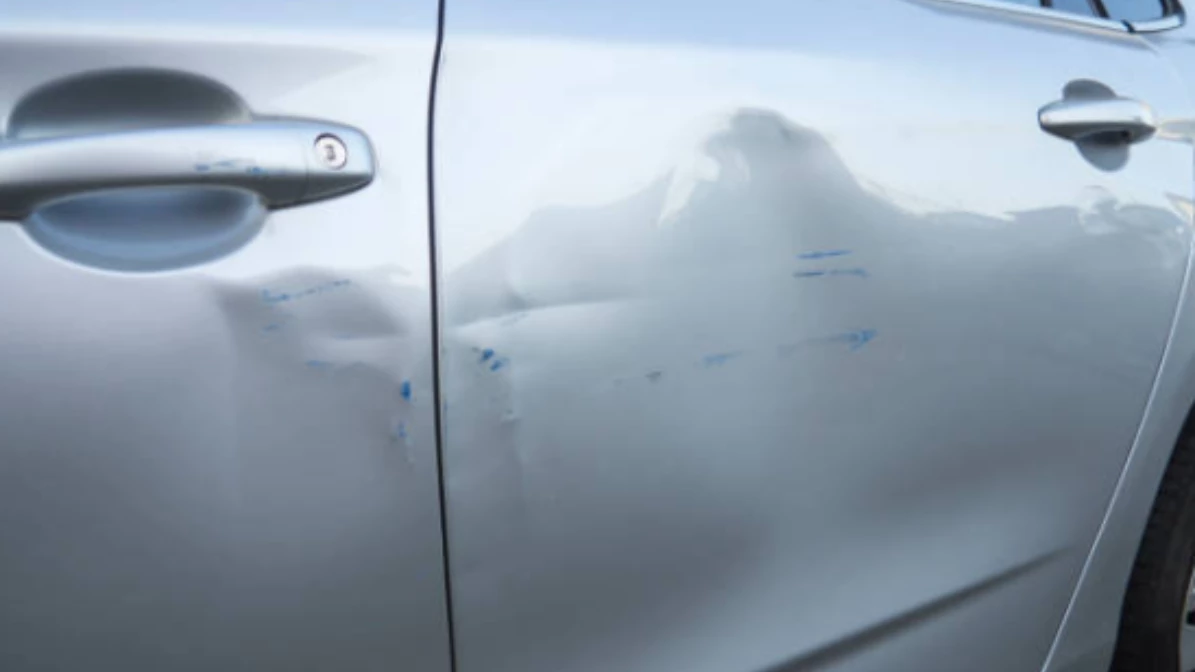
The short answer: it depends on the crease. Paintless dent repair works by gently massaging metal back into shape from behind the panel — but a sharp, well-defined crease can stretch the metal in a way that makes that process a lot trickier, sometimes impossible, without the right technique and experience.
That doesn’t mean every creased dent is a lost cause. Many creased dent repair jobs are still doable with paintless methods, especially when the paint hasn’t cracked and the crease isn’t too deep or sharp.
The real question is whether your specific dent qualifies — and that comes down to a few key factors. Here’s how to tell if your car is a good candidate for paintless car dent removal, or if you’re better off going a different route.
Can deep creases be repaired with paintless dent repair?
Deep creases can sometimes be repaired with PDR, but depth alone does not determine repairability. A technician also considers whether the metal is stretched, whether the original paint remains flexible, where the crease sits, and whether tools can reach the damaged area from a useful angle.
Crease shape and metal stretch
A broad crease with gradual edges may respond better than a narrow fold with a hard center. Sharp damage concentrates deformation into a smaller area, which can stretch metal more severely. Once metal has stretched significantly, returning it to its exact original contour becomes harder without conventional refinishing.
Depth also changes how much controlled movement the technician must make. Instead of forcing the low spot outward at once, the repair usually progresses through many small adjustments. The goal is to release tension across the crease while preserving the surrounding crown, panel shape, and factory finish.
Piedmont Dent Repair notes that selected creases may qualify for PDR when paint is intact and the panel remains workable. An inspection is still necessary because two dents that look similar in photographs can differ in depth, access, previous repairs, and metal stretch. Deep does not automatically mean impossible.
The technician’s skill, lighting, leverage, and patience can influence whether the crease can be refined.
What makes a creased dent difficult to repair with PDR?
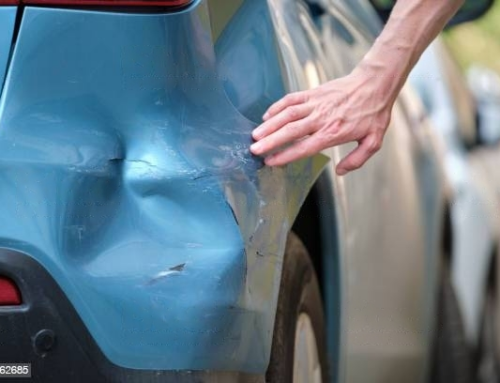
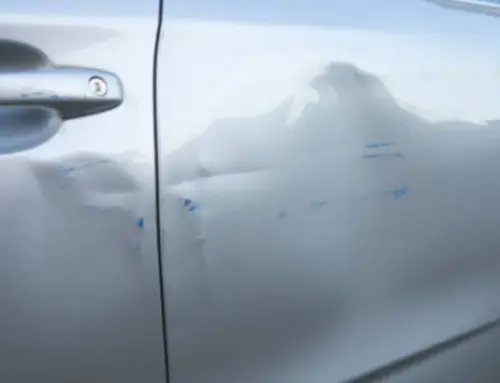
A creased dent is difficult because the damage is not just one low spot. The impact often creates a narrow valley, raised crowns beside it, and tension that extends beyond the most visible line. Correcting only the deepest point can leave distortion, waves, or a visible shadow in reflected light.
Panel access and tool control
Access adds another challenge. Door braces, structural reinforcements, inner panels, wiring, glass, and sound deadening materials can limit the angles available behind the dent. A technician may need to remove trim carefully, choose a different access point, or use exterior glue pulling when direct backside pressure is impractical.
Sharp creases also require extremely accurate tool placement. Pressure applied a few millimeters away from the intended point may shift tension instead of releasing it. Too much force can create a high spot, crack stressed paint, or make the metal harder to refine. Progress must remain controlled.
Another issue is visibility. Technicians use specialized lighting or reflection boards to read tiny changes across the panel. A crease that looks finished under ordinary garage lighting may still show distortion outside. Professional creased dent repair depends on repeatedly checking the entire repair zone, not simply flattening the obvious line.
Previous bodywork can complicate the process because filler, repainting, or weakened coatings may react differently to pressure and pulling methods.
Does the depth of a crease affect paintless dent repair?
Yes. Depth matters because deeper damage usually means the panel traveled farther from its original shape during impact. Greater movement can increase metal stretch, concentrate stress, and create stronger crowns around the dent. A deep crease therefore may require more corrections before the surface returns to a natural contour.
Shallow versus deep crease damage
A shallow crease often leaves more flexibility in the metal, especially when the paint remains intact and the damage sits away from reinforced edges. That does not make every shallow crease easy. A very sharp shallow fold across a body line may still demand precise work because its tension is concentrated.
Depth also affects what a technician can promise before beginning. Photographs help with screening, but reflections and camera angles can hide the true low point. An in person inspection lets the technician examine the panel from several directions and determine whether the metal remains suitable for paintless correction.
Even when a deep crease qualifies, the repair can take longer than a simple door ding. The technician may alternate between lifting lows and reducing highs until tension becomes balanced. The final decision should consider paint condition, access, location, metal stretch, and expected finish quality together.
Depth is important, but technicians evaluate the damage pattern rather than using depth as a cutoff.
Can PDR completely remove a sharp body line crease?
Sometimes. A sharp crease crossing a body line can be repaired with PDR when the paint is intact, access is workable, and the metal has not been stretched or folded beyond recovery. Body lines are harder because they are intentional contours that must be recreated accurately, not simply flattened.
Body lines demand precision
When a body line is dented, the surrounding panel can develop several tension zones. The technician may need to rebuild the line gradually while correcting crowns above, below, or beside it. If the line is raised too quickly, the repair can look sharp in one area and soft in another.
Complete removal is most realistic when the factory finish is undamaged and the metal can return without excessive resistance. A line with cracked paint, torn metal, severe stretching, or a hard folded edge may need traditional repair. Previous filler or repainting can also change what techniques are safe.
Owners should judge success by the panel as a whole. Under proper reflection, a repaired body line should transition naturally into the undamaged metal around it. A tiny remaining distortion may be acceptable in an extreme crease, while many moderate body line dents can be restored to a result that is difficult to detect.
The technician’s assessment should set expectations before work begins.
How does a technician repair a creased dent without damaging the paint?
A technician repairs a crease by changing the metal in very small, controlled steps. The first goal is to understand how the impact displaced the panel. Specialized lights or reflection boards reveal lows, highs, crowns, and subtle waves that ordinary lighting can hide. That visual feedback guides every tool movement.
Controlled pressure from behind the panel
When backside access is available, the technician positions a specialized rod or hand tool behind the damaged area. Instead of making one hard push, the metal is lifted through many precise movements. The technician works across the crease, balancing the deepest low with the tension stored in nearby crowns.
Exterior pulling when backside access is limited
When direct access is limited, exterior pulling may be appropriate. Tabs can be attached temporarily with specialized adhesive, then used to raise selected areas. The method requires judgment because previous paintwork, weak finishes, sharp edges, and excessive pulling force can increase the risk of paint damage.
High spots are reduced carefully. This relieves tension and helps the panel settle toward its original geometry. The technician changes viewing angles to avoid new distortions. Heat may be managed on repairs to support flexibility, but temperature control depends on the panel, finish, and conditions.
Good PDR is gradual. The technician preserves paint by minimizing force, avoiding unnecessary abrasion, and respecting access limits. If the coating shows stress or the metal stops responding predictably, continuing can create a worse result. Knowing when to stop is part of paintless dent repair.
When does a creased dent require traditional body repair?
A crease may require traditional body repair when the damage cannot be reshaped while preserving the existing finish. Common warning signs include cracked paint, exposed metal, severe stretching, torn metal, extremely sharp folds, inaccessible damage, or previous repairs that make PDR methods unsafe or unreliable.
Paint condition changes the repair decision
Paint condition matters because PDR depends on the finish surviving movement as the panel is reshaped. Factory paint may remain flexible during appropriate repairs, but existing chips, cracks, poor adhesion, or unknown repainting can increase risk. If refinishing is necessary, conventional bodywork may be practical.
Metal stretch is another limit. A fold can pull material away from its original dimensions. Technicians may improve stretched areas, but the panel cannot always return cleanly through pushing and pulling alone. Traditional repair can use metalwork, filler, primer, and repainting instead.
Location can decide the method. Creases at reinforced edges, double metal areas, seams, or inaccessible sections may prevent useful tool placement. A technician should determine whether safe access can be created before removing parts or recommending invasive work.
Traditional repair is not a failure of PDR. It is the better choice when restoring appearance and durability requires refinishing or structural correction. A technician should explain what can be achieved before work begins, including whether PDR is appropriate or conventional repair is safer beforehand.
Does paintless dent repair work on long or narrow creases?
Yes. PDR can work on long or narrow creases, but length is only one factor. A long crease that is shallow, smooth, accessible, and free from paint damage may be more repairable than a short crease that contains a sharp fold, severe stretch, or cracked finish.
Length matters less than overall severity
Long creases often require the technician to manage tension across a wider section of the panel. One end may respond differently from the center or opposite end. The repair can involve progressing along the line gradually, correcting nearby crowns, and repeatedly checking reflections to keep the overall panel shape consistent.
Narrow creases can be difficult because the damage concentrates force into a thin line. The metal beside the crease may be relatively undisturbed while the center is sharply displaced. Accurate tool tips, controlled leverage, and strong visual feedback become especially important when the repair zone offers little room for error.
Panel construction matters too. Aluminum, steel, braces, edges, and previous repairs can change access, leverage, and how the metal responds.
The best candidate has intact paint, manageable stretch, access, and a correctable crease. For car dent removal, length should be judged with depth, sharpness, location, body line involvement, and finish condition. Inspection gives a better answer than length alone.
Key Takeaways
Creased dents are not automatically excluded from PDR. Repairability depends on paint condition, crease depth, sharpness, metal stretch, body line involvement, access, and panel construction.
Shallow, smooth creases with intact factory paint are generally easier to correct than sharp folds or deeply stretched damage. Long creases can still qualify when technicians can control tension across the panel.
Traditional repair becomes more appropriate when paint is cracked, metal is torn, access is unsafe, or the panel cannot return cleanly. A professional inspection remains the best way to set realistic expectations beforehand.
Get a Clear Crease Repair Assessment From Piedmont Dent Repair
A crease can look simple from one angle and much more complex under proper repair lighting. Before deciding between PDR and conventional bodywork, have the damage evaluated for depth, stretch, paint condition, body line involvement, and access.
Piedmont Dent Repair evaluates dents and creases to determine whether a paintless approach is appropriate. If the panel qualifies, the goal is to restore its shape while preserving the existing finish whenever possible.
If you have a sharp, deep, long, or narrow crease, contact Piedmont Dent Repair for an assessment. A technician can review the damage, explain realistic repair expectations, and help you understand whether PDR or traditional body repair is the better path for your vehicle based on its condition.