Table of Contents
- How Can You Tell If A Dent Is Too Severe For Paintless Dent Repair?
- Can Pdr Fix A Dent If The Paint Is Cracked Or Chipped?
- Are Deep Dents Suitable For Paintless Dent Repair?
- Can Stretched Metal Be Repaired Using Pdr?
- Does The Location Of A Dent Affect Whether Pdr Will Work?
- Can Paintless Dent Repair Fix Dents With Sharp Edges?
- When Is Traditional Auto Body Repair Better Than Pdr?
- Key Takeaways
- Get The Right Dent Repair Recommendation From Piedmont Dent Repair
Not every dent plays by the same rules, and that’s exactly why paintless dent repair works wonders on some and does nothing for others. This method relies on gently reshaping metal from the underside of the panel while the paint stays perfectly intact — which means anything that’s cracked the finish, stretched the metal too far, or landed in a tricky spot is going to be a tough sell.
So what actually falls into that “no” category? Sharp creases, dents near body lines or edges, and severe dent damage where the metal has lost its memory are the usual suspects.
Understanding these types of car dents upfront can save you a wasted trip to a shop that only does paintless work — here’s what to watch for.
How can you tell if a dent is too severe for paintless dent repair?
A dent may be too severe for PDR when the impact has changed more than the visible shape of the panel. The technician must determine whether the metal can move back toward its original contour without cracking the finish or leaving excessive distortion.
Look beyond the diameter of the dent
Large dents are not automatically unsuitable. Some broad dents have gradual edges, limited metal stretch, and intact factory paint. Those conditions can make them better candidates than a much smaller dent with a sharp fold.
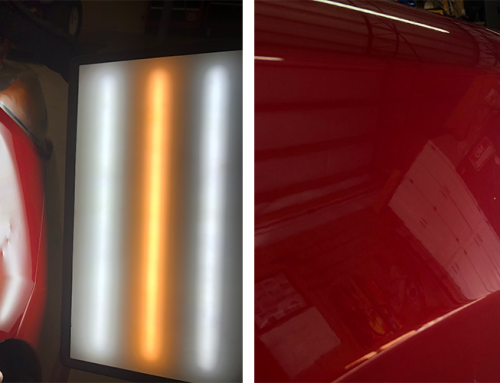
The technician looks at the deepest point, surrounding crowns, body lines, edges, and the way reflections move across the damaged panel. These details show how much tension remains in the metal.
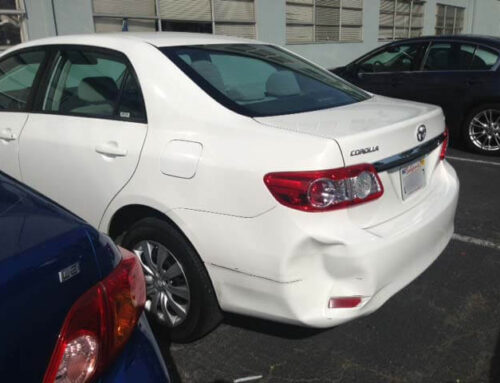
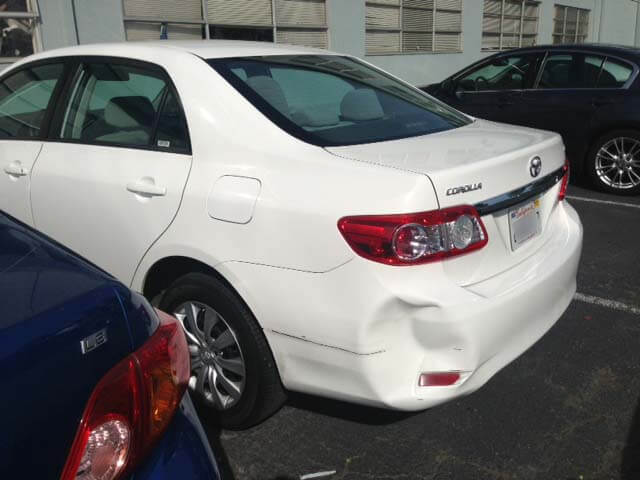
Evidence of severe dent damage may include crushed panel edges, torn metal, extremely tight folds, paint failure, extensive stretching, or damage caused by a substantial collision. These conditions often require more than controlled pushing and pulling.
Previous body repairs matter as well. Filler, repainting, poorly bonded coatings, or earlier structural work may make the panel less predictable during PDR.
Access is another deciding factor. Even a repairable dent shape may become impractical if structural braces, bonded panels, or other components prevent safe tool positioning.
A professional assessment combines all these factors instead of deciding from dent size alone.
Can PDR fix a dent if the paint is cracked or chipped?
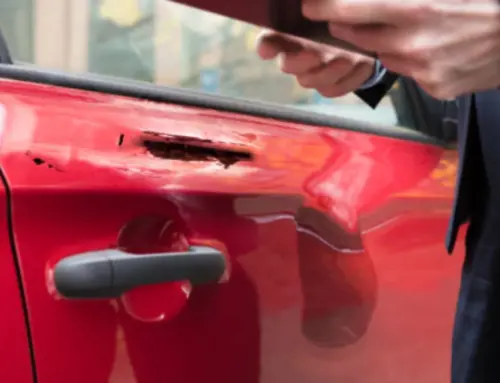
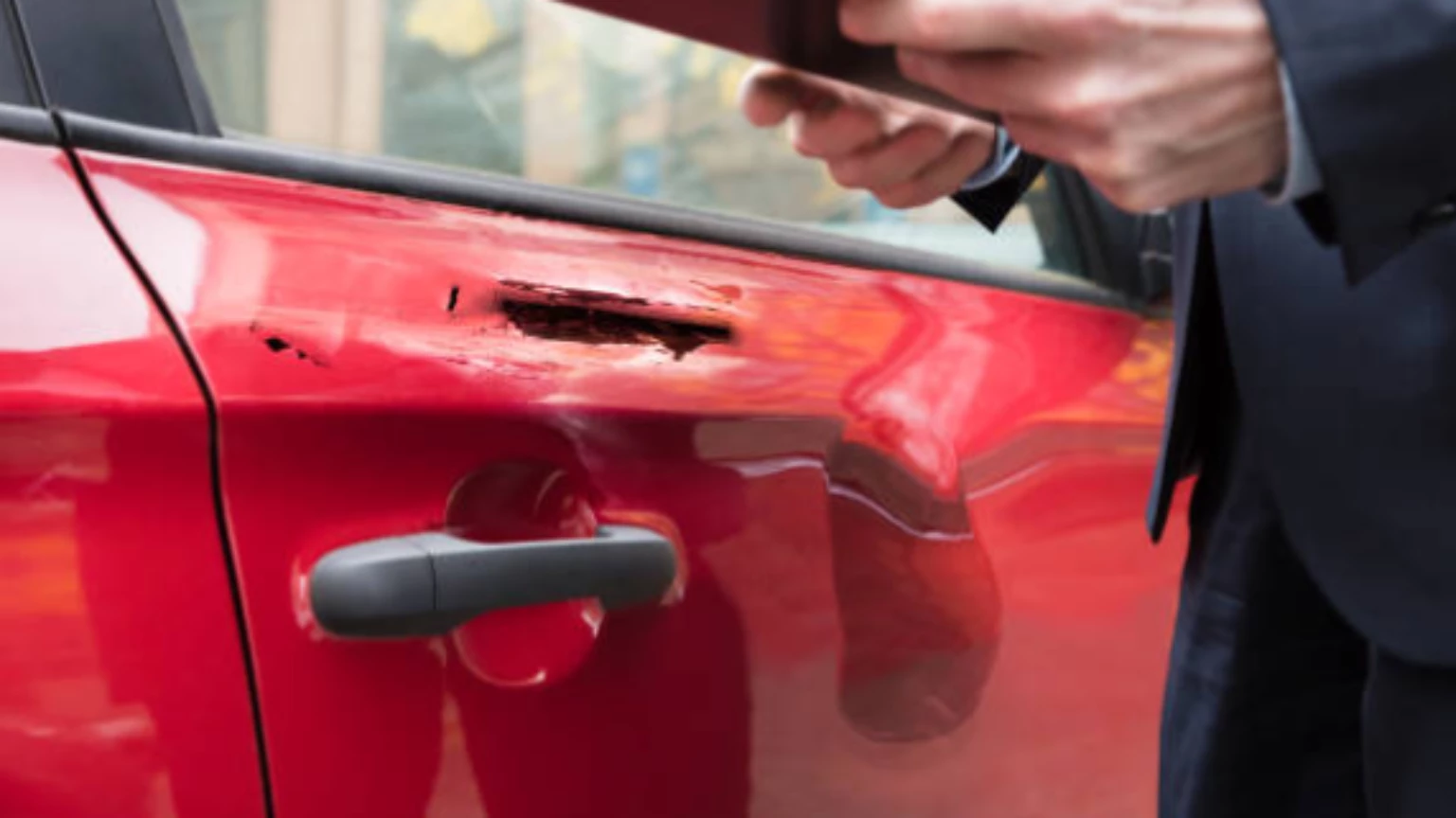
PDR is designed to restore the shape of a damaged panel while preserving the existing finish. If paint has cracked or chipped during the impact, the dent may still be physically movable, but the repair is no longer a simple paint-preservation job.
Paint condition changes the repair plan
Factory paint can often flex during controlled dent correction. Once the coating is already broken, however, reshaping the metal does not restore the missing finish.
A technician may sometimes improve the shape with PDR techniques before the panel is refinished. This approach can reduce the amount of filler or conventional metalwork required. The vehicle may still need paint repair afterward.
Cracked paint can also reveal how severe the impact was. A sharp crease or heavily stretched area may place enough tension on the coating to split it. That same tension can make the underlying metal harder to restore accurately.
Chipped paint at an unrelated older defect does not always eliminate PDR as an option. The technician must determine whether moving the nearby metal could make the damaged coating worse.
Repainted panels require additional caution. Aftermarket finishes may not have the same adhesion or flexibility as the original factory coating.
When preserving the existing paint is no longer realistic, conventional body repair or a combined repair approach may provide the more complete result.
Are deep dents suitable for paintless dent repair?
Some deep dents are suitable for PDR. Depth makes the repair more challenging, but it does not create an automatic cutoff.
A deep dent with broad, smooth transitions may respond better than a shallow dent with a razor-sharp center. What matters is how the metal moved during the impact.
Depth can increase metal tension
As a panel is pushed farther inward, the metal may stretch and surrounding areas may rise into crowns. Restoring the surface requires balancing those low and high areas gradually.
A technician normally avoids pushing the deepest point outward in one aggressive movement. That approach can create a high spot, concentrate stretch, or place unnecessary stress on the paint.
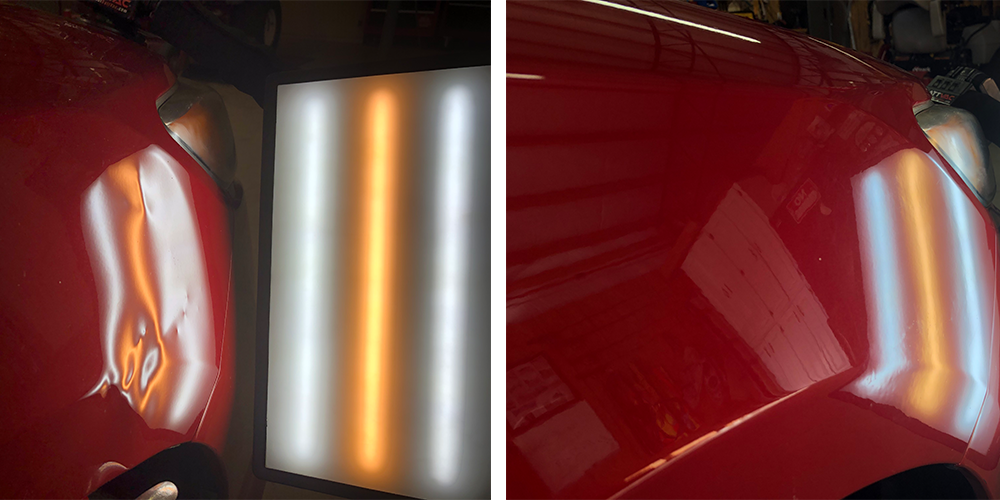
Instead, the technician reads the panel under specialized lighting and makes many controlled adjustments. The goal is to reduce tension while returning the metal toward its original contour.
Deep dents near body lines, edges, reinforced areas, or complex curves can be especially difficult because those locations resist movement differently from open portions of a door or quarter panel.
The types of car dents that qualify for PDR therefore cannot be classified by depth alone. Paint condition, metal stretch, access, impact shape, panel material, and surrounding structure all affect the decision.
A photograph may help with an initial estimate, but hands-on inspection provides a clearer picture of repairability.
Can stretched metal be repaired using PDR?
Limited metal stretch can often be managed during PDR. Excessive stretch is one of the main reasons a dent may not return perfectly to its original shape.
When metal is dented, it does not always simply move inward and wait to be pushed back. A strong impact can physically change the amount and distribution of material across the damaged area.
Why stretched metal is challenging
Imagine pressing a smooth sheet into a deep bowl shape. As the center moves inward, tension develops around the surrounding area. If the deformation becomes extreme, returning the center does not automatically restore every original dimension.
Technicians can sometimes manage mild stretches by carefully balancing lows, highs, crowns, and tension across the repair zone. This requires precise tool placement and repeated refinement.
Severely stretched metal may remain loose, wavy, or unable to hold the correct contour after being moved. At that point, traditional bodywork may be needed to reshape the panel and prepare it for refinishing.
Heat may sometimes be managed carefully during complex repairs to support paint flexibility and metal movement, but it does not magically shrink every stretched dent back to factory dimensions.
A skilled technician should identify excessive stretch before promising a complete PDR result.
The goal is not simply to make the dent shallower. The repaired panel should also maintain the correct contour under normal viewing conditions.
Does the location of a dent affect whether PDR will work?
Yes. Dent location can strongly affect whether PDR is practical, even when the visible damage appears moderate.
Technicians need a way to apply controlled pressure or pulling force while accurately reading how the metal responds.
Open areas are often easier to access
A dent in the middle of a relatively open door skin may provide useful access from behind after trim components are safely removed.
Other locations can be much more difficult.
Panel edges, wheel openings, door seams, roof rails, reinforced body lines, and areas directly over structural braces may limit tool movement. Double-layered metal can prevent a technician from reaching the precise point that needs pressure.
Some damage can be approached from the exterior using specialized glue-pulling techniques. This does not make every inaccessible dent repairable. Paint condition, panel material, previous refinishing, and the shape of the damage still matter.
Location also affects panel strength. Metal near an edge or structural line often behaves differently from the broad center of a panel. A sharp dent near those areas may hold substantially more tension.
Safety and disassembly requirements matter too. A technician should not create unnecessary access holes or disturb important components simply to force a repair method to work.
The correct method depends on both the dent and the structure surrounding it.
Can paintless dent repair fix dents with sharp edges?
Some sharp dents can be repaired, but sharp edges and folds are among the more difficult PDR conditions.
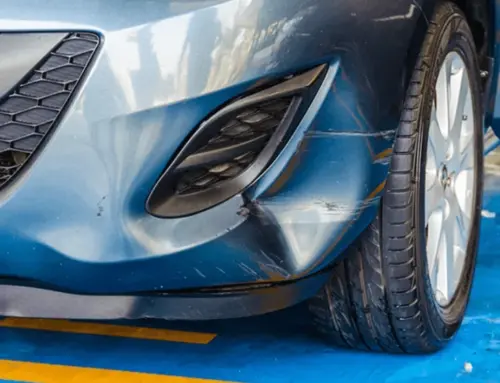
A rounded dent distributes impact over a wider area. A sharp dent concentrates force along a narrow point or line, creating stronger tension and increasing the chance of metal stretch.
Sharp folds demand precise tool placement
Repairing a sharp dent usually requires extremely controlled movements. The technician may need to release crowns around the damage before gradually raising the deepest portion.
Working too aggressively can create high spots or put additional stress on the finish.
Paint condition is especially important. A tight crease may place enough strain on the coating to crack it during the original impact. If the finish remains intact, the technician must still consider how much additional movement it can tolerate.
Sharp damage across a factory body line adds another challenge. The technician must rebuild the intended contour while keeping the surrounding panel smooth. Flattening the dent without recreating the line accurately can leave the repair visible.
Dents with extremely tight folds, crushed edges, torn metal, or heavy stretching may need conventional metalwork and repainting.
Sharp does not automatically mean impossible. It means the technician needs to evaluate the exact fold, depth, access, finish, and metal condition before determining whether PDR can provide an acceptable result.
When is traditional auto body repair better than PDR?
Traditional body repair is better when restoring the vehicle properly requires paintwork, filler, welding, panel replacement, structural correction, or more extensive metal reshaping than PDR can provide.
The best repair method should match the damage rather than forcing every dent into a paintless process.
Conventional repair handles finish and structural problems
If paint is badly cracked, scratched through, or missing, reshaping the dent alone will not restore the finish. Conventional repair allows the damaged area to be prepared, filled when appropriate, primed, color matched, and refinished.
Torn or punctured panels also need more than standard PDR.
Major collision damage may affect mounting points, internal reinforcements, panel alignment, or vehicle structure. Those concerns require appropriate collision repair procedures and measurement, not cosmetic car dent removal alone.
Traditional repair can also be the better choice when metal is excessively stretched or a sharp fold cannot be restored cleanly while preserving the original surface.
Replacement may be considered when repairing the existing panel would be impractical or would not provide a reliable result.
PDR and traditional body repair are not competing methods in every situation. Each has a proper use.
A responsible technician should recommend PDR when it can preserve the factory finish and restore the contour effectively. When those conditions are not present, conventional repair may produce a safer and more complete result.
Key Takeaways
Not every dent is suitable for PDR. Repairability depends on paint condition, metal stretch, depth, sharpness, location, panel access, previous repairs, and the overall severity of the impact.
Large dents can sometimes qualify when their edges are gradual and the finish remains intact, while smaller sharp folds may require conventional repair. Cracked paint, torn panels, excessive stretching, inaccessible damage, and structural collision concerns often make traditional bodywork more appropriate.
A professional inspection is the most reliable way to choose the correct repair method for the vehicle involved.
Get the Right Dent Repair Recommendation From Piedmont Dent Repair
Choosing between PDR and traditional body repair should begin with an accurate assessment of the panel, not an assumption based only on dent size.
At Piedmont Dent Repair, the goal is to determine whether the damaged metal can be restored while preserving the existing finish. A technician can evaluate the dent’s depth, shape, paint condition, location, accessibility, body line involvement, and amount of metal stretch before recommending a repair approach.
Some dents are excellent PDR candidates. Others may improve through paintless techniques but still need refinishing. More severe damage may be better handled through conventional body repair from the start.
If you are unsure whether your dent can be repaired without paint or filler, Piedmont Dent Repair can inspect the damage and explain what is realistically achievable. A clear evaluation helps you understand the repair options before deciding how to proceed.