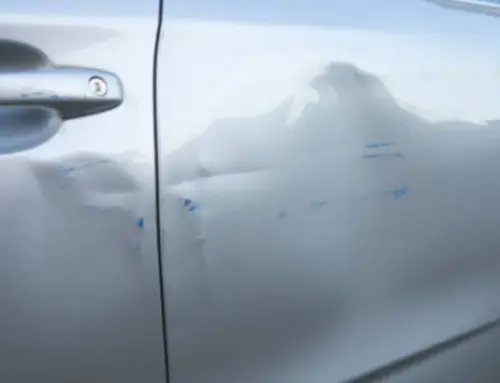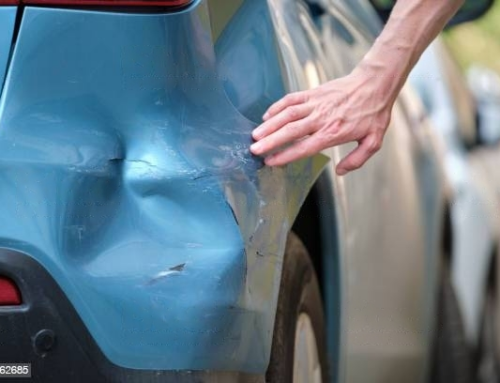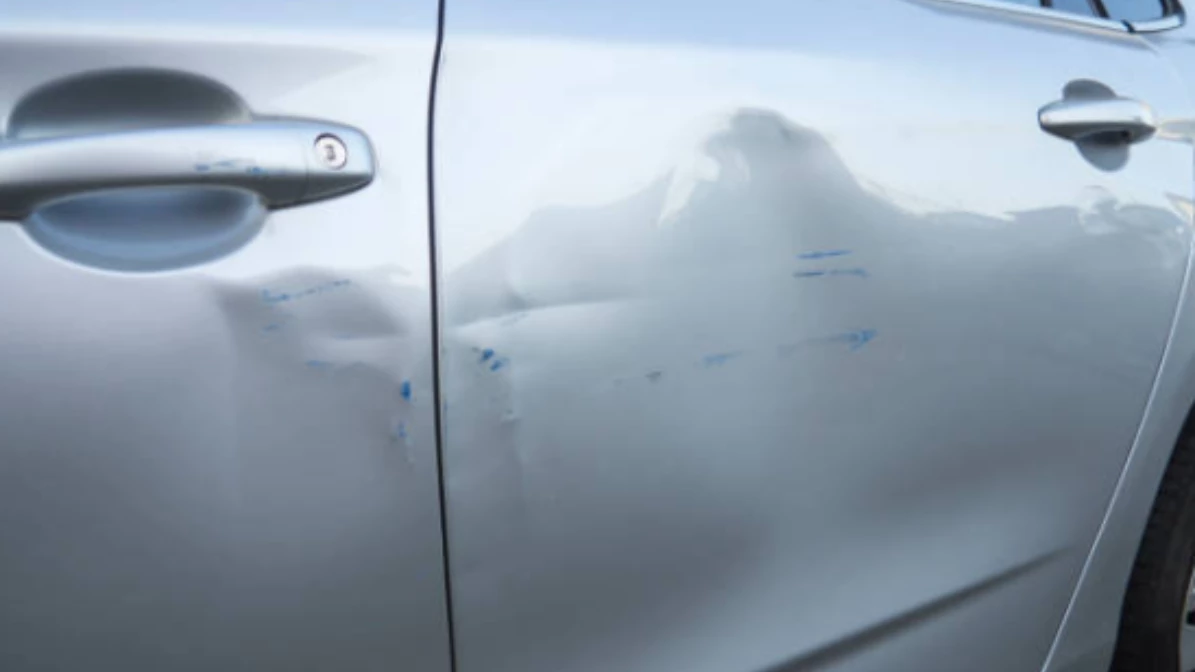
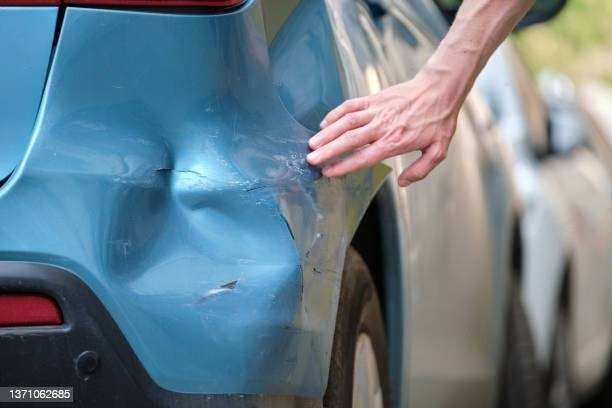
Not every dent plays by the same rules, and that’s exactly why paintless dent repair works wonders on some and does nothing for others. This method relies on gently reshaping metal from the underside of the panel while the paint stays perfectly intact — which means anything that’s cracked the finish, stretched the metal too far, or landed in a tricky spot is going to be a tough sell.
So what actually falls into that “no” category? Sharp creases, dents near body lines or edges, and severe dent damage where the metal has lost its memory are the usual suspects. Understanding these types of car dents upfront can save you a wasted trip to a shop that only does paintless work — here’s what to watch for.
Why are dents near panel edges harder to repair with PDR?
Dents near panel edges are harder because the metal around an edge behaves differently from the broad center of a door, fender, quarter panel, or hood. Edges often contain folds, seams, reinforcement, or multiple layers of metal that make the area stronger and less flexible.
When an impact reaches this area, the force may become concentrated into a smaller section. The dent can develop a sharp low point, raised crowns, or distortion that extends into the panel edge.
Edge construction limits metal movement
The edge of a door or fender is rarely just a single flat sheet of metal. Manufacturers commonly fold or hem outer sheet metal around an inner structure. This construction gives the panel strength, but it can also limit the movement available during repair.
A technician cannot always push directly behind the deepest portion of an edge dent. The inner structure may block the tool or leave very little room for leverage.
The metal may also hold more tension than a similar dent located several inches farther into the panel. Restoring the shape requires controlled pressure across the damaged area rather than simply pushing the lowest point outward.
Sharp edges increase repair difficulty
An impact that lands directly on a firm edge can create a narrow crease or folded appearance. This type of damage concentrates stress and may stretch the metal.
For panel edge dent repair, the technician must consider whether the original contour can be recreated without overcorrecting the edge or creating new high spots nearby.
A rounded dent close to an edge may still be a good candidate. A crushed, folded, or heavily stretched edge can require conventional repair.
Can PDR fix a dent close to a door or fender edge?
Yes. Many dents near door and fender edges can be repaired with PDR, especially when the damage is shallow or moderate, the finish remains intact, and enough access exists to control the metal.
The exact distance from the edge is less important than the construction underneath the damaged area.
Door edges can contain several obstacles
Doors contain internal braces, window tracks, wiring, locks, handles, impact beams, and other components. A dent may look accessible from outside but sit directly over reinforcement inside the door.
A technician may remove an interior trim panel or use an existing factory access point to reach the damaged metal. In other situations, exterior glue pulling may provide a better approach.
The repair method should avoid unnecessary alteration of the vehicle.
Fender edges vary by location
Front fenders can sometimes provide useful backside access after liners or nearby components are moved safely. Other sections may be reinforced or tightly curved.
A dent near a wheel opening can be especially challenging because that edge is shaped and strengthened to hold its contour.
The technician must restore both the dent and the original curve of the opening.
If the edge has been crushed inward, sharply folded, or pushed out of alignment, PDR may become less practical.
Paint condition remains important as well. If the impact has cracked or chipped the finish, the panel may still be reshapeable, but refinishing could be necessary afterward.
A close inspection usually provides a more reliable answer than estimating repairability from photographs alone.
Does limited tool access affect paintless dent repair near an edge?
Yes. Tool access can significantly affect whether an edge dent can be repaired effectively.
PDR technicians normally need a controlled way to move the metal while watching the panel under specialized lighting. If a reinforcement, seam, brace, or inner structure blocks the damaged area, the technician may not be able to apply pressure at the exact location required.
Direct access provides greater control
When the back of the dent is accessible, specialized rods and hand tools allow the technician to make very small adjustments.
The tool tip is positioned behind specific low points. Pressure is applied gradually while the technician watches reflections across the exterior surface.
Edge damage often requires especially precise placement because the surrounding metal can be stiff.
Glue pulling can provide another option
When backside access is unavailable, exterior glue pulling may be considered.
Specialized tabs are temporarily attached to the painted surface and used to lift selected areas. High spots can then be reduced carefully to balance the metal.
Glue pulling does not make every inaccessible dent repairable. Repainted panels, weak paint, sharp folds, severe stretch, and some edge locations may increase risk.
Access should also be created responsibly. A technician should not damage structural components or make unnecessary modifications simply to reach a dent.
The best repair plan uses the safest available access while preserving the panel, finish, and surrounding vehicle components.
Can dents along reinforced panel edges be repaired without repainting?
They sometimes can.
Reinforcement makes an edge harder to manipulate, but it does not automatically mean the paint must be removed or the panel must be refinished.
The key question is whether the metal can be restored while the existing coating remains stable.
Paint condition is critical
PDR works best when the factory finish is intact.
A dent may look severe but still retain flexible, undamaged paint. If the metal can be moved gradually without overstressing the coating, the original finish may be preserved.
A smaller dent with cracked paint presents a different situation. Reshaping the metal does not restore missing paint.
Repainted panels also require caution because aftermarket coatings may have different adhesion and flexibility.
Reinforcement changes leverage
A brace or folded edge can reduce movement behind the dent. The technician may need to approach the damage from several angles, use smaller tools, or combine pushing and pulling techniques.
Progress can be slower because the surrounding structure resists movement.
The technician must avoid transferring force into the reinforcement or creating distortion elsewhere.
If the dent is located directly over multiple layers of rigid metal, complete access may not be possible.
In those cases, the technician must decide whether a safe paintless result is realistic or whether conventional auto body dent repair would provide a better finish.
Does the severity of an edge dent determine whether PDR will work?
Severity is one of the most important factors, but it is not measured by dent size alone.
A large, shallow dent near an edge may be more repairable than a small dent with a tight fold, cracked paint, or heavily stretched metal.
Depth and sharpness affect metal tension
Deeper dents move the panel farther from its original shape. This can create stronger crowns and greater tension around the impact area.
A sharp center concentrates that deformation into an even smaller space.
The technician must release this tension gradually. Pushing too aggressively can create high spots or increase stress on the paint.
Metal stretch can create a limit
Mild stretch can sometimes be managed through careful correction. Severe stretch is more difficult because the panel may no longer naturally hold its original contour.
The metal can become loose, wavy, or resistant to precise reshaping.
Paint damage changes the goal
If the finish is already cracked, chipped, or scraped through, preserving the original paint may no longer be possible.
PDR techniques might still reduce the amount of conventional metalwork required, but refinishing may remain necessary.
A professional assessment considers severity as a combination of depth, sharpness, metal stretch, edge construction, body line involvement, paint condition, and access.
No single measurement determines every repair.
Can PDR repair a dent located near a body line?
Yes. Dents near or across body lines can often be repaired with PDR, but these repairs require additional precision.
Body lines are intentional contours stamped into the panel. When they are dented, the technician must restore both the damaged area and the original design line.
Body lines create stronger shapes
A body line adds rigidity to sheet metal. That rigidity can help the panel maintain its normal shape, but it can also make dent correction harder.
An impact may flatten the line, push it inward, or create raised areas on either side.
The technician cannot simply make the panel flat. The original line has to be rebuilt accurately.
Nearby edge damage adds another complication
When a body line runs close to a panel edge, two difficult conditions may overlap.
The edge can restrict tool access while the body line increases stiffness. A crease may also extend from the edge directly through the line.
In these cases, the technician often works in stages.
Crowns may need to be reduced before the low area is raised. The body line is then gradually refined until it transitions naturally into undamaged metal.
Specialized lighting helps reveal subtle waves and distortions throughout the process.
Many moderate body line dents can be repaired successfully. Sharp folds, severe stretching, cracked paint, or inaccessible reinforcement can reduce the likelihood of a complete paintless result.
When does an edge dent require conventional body repair?
Conventional body repair becomes more appropriate when restoring the panel requires repainting, filler, welding, structural correction, panel replacement, or metal reshaping beyond what PDR can accomplish safely.
The repair method should match the damage rather than forcing a paintless approach.
Cracked or missing paint may require refinishing
If the impact has split the finish or exposed bare metal, PDR alone cannot restore the coating.
The metal may still be reshaped first, but paint repair may be necessary to complete the job.
Crushed edges can exceed PDR limits
A heavily folded door edge, wheel opening, hood edge, or quarter panel seam may contain severe distortion.
The outer skin and inner structure can sometimes be compressed together. Returning those layers to their original dimensions may require conventional metalwork.
Torn or severely stretched metal needs broader repair
PDR is not intended to repair torn sheet metal or major structural collision damage.
If the panel has stretched so much that it cannot maintain the original contour, body filler, refinishing, or panel replacement may provide a more complete result.
Structural damage should also be evaluated through proper collision repair procedures.
Choosing traditional repair does not mean PDR has failed. It means the damage requires methods designed for paint restoration, heavier metal correction, or structural work.
A qualified technician should explain these limits before beginning.
Key Takeaways
Edge dents can often be repaired with PDR, but their location makes them more complicated than dents in open panel areas. Repairability depends on paint condition, depth, sharpness, metal stretch, body line involvement, reinforcement, and safe tool access.
Moderate dents near door, fender, hood, or quarter panel edges may still qualify when the metal remains workable. Crushed seams, torn metal, cracked paint, severe stretching, or structural damage can require conventional body repair.
A professional inspection provides the clearest answer because exterior appearance alone rarely shows every repair limitation.
Get an Edge Dent Evaluated by Piedmont Dent Repair
A dent near a door, fender, hood, or quarter panel edge deserves a closer look before choosing a repair method. What appears to be a simple low spot may involve reinforcement, folded metal, a body line, or limited backside access.
Piedmont Dent Repair can evaluate the dent’s depth, shape, paint condition, location, metal stretch, and available access to determine whether a paintless approach is appropriate.
When the panel qualifies, the goal is to restore the original contour while preserving the existing finish whenever possible. If the edge is too severely damaged for PDR, knowing that early can help you avoid an ineffective repair attempt.
If you have a dent close to a panel edge, Piedmont Dent Repair can inspect the damage and explain the most practical repair path based on the condition of your vehicle.