Professional dent repair provides controlled metal correction, proper damage assessment, and a more predictable finish than most home repair attempts. In a diy dent repair vs professional comparison, trained technicians also reduce the risk of cracked paint, stretched metal, broken trim, and hidden damage.
DIY methods may improve a shallow dent, but results depend on panel material, access, paint condition, and tool control. A repair that appears simple can become more expensive after excessive pulling or heating.
Professional evaluation protects the factory finish, vehicle value, repair budget, and long-term appearance while identifying when conventional bodywork is necessary.
Is DIY dent repair effective?
DIY dent repair may improve a shallow, rounded dent when paint is intact and access is simple. Consumer pulling tools can move metal, but improvement is not complete repair.
The method is less reliable on sharp creases, body lines, panel edges, aluminum, stretched metal, or areas blocked by braces.
Results depend on understanding metal movement
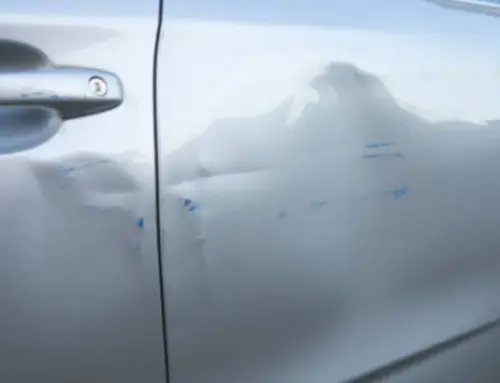
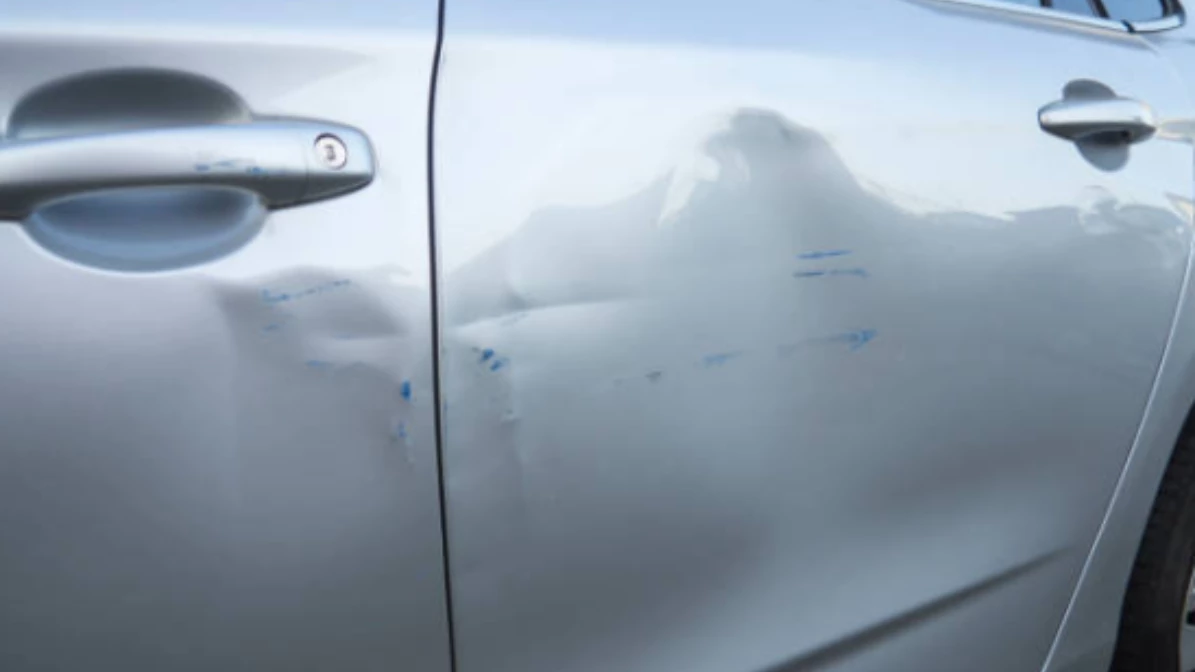
A dent includes a low area and surrounding tension. Pulling only the center may create high spots, waves, or a raised ring around the impact. The panel may look better from one angle while remaining distorted under repair lighting.
Home methods also provide limited control over force. Too little pressure changes nothing. Too much pressure can reverse the dent or damage the finish.
DIY work is most reasonable when an imperfect cosmetic improvement is acceptable. Newer, leased, and insured vehicles deserve inspection before experimentation.
Can DIY dent removal damage my car?
Yes. Improper pulling, pushing, heating, drilling, or trim removal can create damage that was not present originally. Common problems include cracked clear coat, chipped paint, stretched metal, tool marks, broken clips, and scratches behind the panel.
Heat presents another risk. Household heat guns and boiling water do not provide precise temperature control. Excessive heat can discolor paint, weaken adhesives, damage plastic parts, or affect nearby electronics.
Hidden components may sit behind the dent
Doors, quarter panels, roofs, and liftgates may contain wiring, airbags, sensors, intrusion beams, sound insulation, and bonded reinforcements. Blindly inserting rods or drilling access holes can strike these components.
Glue pulling can also lift weak or previously refinished paint. A panel that looks original may contain filler or older repair work.
AAA notes that excessive force during paint correction can worsen surface damage, illustrating why controlled technique matters around automotive finishes.
An inspection can identify access points and previous repairs before pressure is applied. Understanding whether paintless dent repair can damage paint also helps vehicle owners understand why paint condition matters before correction begins.
Why should I hire a professional for dent repair?
A professional evaluates the dent, paint, material, access, body lines, and previous repairs before selecting a method.
Technicians also understand when paintless dent repair is appropriate and when conventional bodywork, refinishing, or panel replacement is safer.
Professional judgment reduces unnecessary work
A trained technician can:
- Map the full damaged area
- Identify crowns and tension
- Confirm steel or aluminum construction
- Select safe access points
- Remove trim correctly
- Control pushing and pulling force
- Protect paint during correction
- Recognize structural concerns
- Set realistic expectations
- Document the completed repair
State Farm describes paintless dent repair as a process using specialized tools to apply pressure behind a panel or pull from the exterior without disturbing the finish.
Those methods require lighting, patience, and repeated fine adjustments. Professional skill is especially valuable when preserving factory paint affects resale or lease-return value.
Does professional dent repair provide better results?
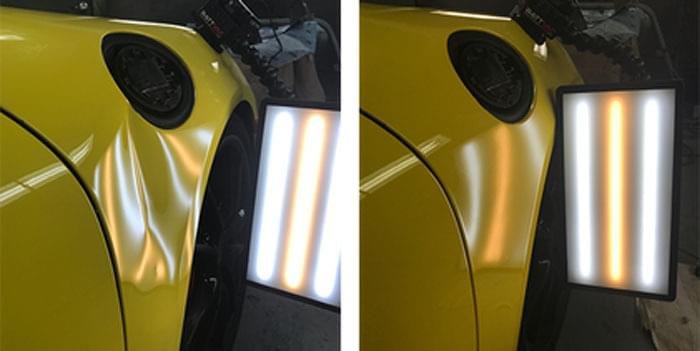
Professional repair usually provides a smoother, more consistent result because technicians can read reflections across the panel and correct small distortions gradually. They work beyond the visible center of the dent to restore surrounding metal tension.
The result depends on damage severity. No ethical technician should promise perfection before inspecting paint condition, stretching, access, and previous repairs.
Better results include more than appearance
A quality repair should also protect:
- Paint adhesion
- Corrosion resistance
- Interior trim
- Wiring and sensors
- Panel alignment
- Factory seams
- Future resale documentation
- Warranty expectations
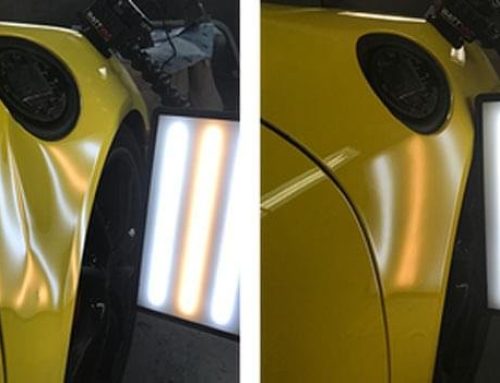
A DIY repair may appear acceptable in shade but reveal waves under sunlight or shop lighting. Inspection lights expose highs, lows, crowns, and texture changes throughout the repair area.
When PDR qualifies, the original coating remains in place. This avoids filler, primer, color matching, overspray, and paint blending. State Farm explains that PDR removes qualifying surface dents without disturbing the vehicle finish. Preserving the original coating is one reason paintless dent removal is valued for maintaining factory finishes.
What tools do professionals use for dent repair?
Professionals use tools designed for controlled access, precise pressure, and accurate visual feedback. The exact equipment depends on whether the technician is pushing from behind the panel, pulling from outside, or completing conventional metalwork.
Common professional tools include:
- PDR rods and picks
- Whale tails and flat bars
- Interchangeable tool tips
- Glue tabs and pullers
- Slide hammers and mini lifters
- Knockdowns and blending hammers
- Inspection lights and line boards
- Heat-control equipment
- Panel-protection wedges
- Trim-removal tools
- Measuring and estimating systems
- Body hammers, dollies, and spoons
I-CAR provides dedicated instruction on paintless dent removal using picks and on the proper use of body hammers, picks, and spoons for steel and aluminum panels.
Tools do not replace skill. Technicians must control leverage, placement, metal response, and pressure to avoid creating difficult high spots. Modern PDR techniques rely on that combination of specialized equipment and controlled technique.
Is professional dent repair worth the cost?
Professional service is usually worthwhile when factory paint, resale value, insurance documentation, or dependable results matter. It can prevent a minor dent from becoming a larger refinishing job.
Cost depends on dent size, depth, location, access, panel material, body-line involvement, and total damage. A simple door ding may require limited labor. Extensive hail damage may involve hundreds of dents and substantial disassembly.
Compare the complete financial impact
Consider:
- Professional repair price
- Risk of DIY paint damage
- Cost of replacing broken trim
- Potential need for repainting
- Lease-return charges
- Vehicle downtime
- Insurance requirements
- Reduced trade-in value
- Warranty coverage
A low-cost kit becomes expensive if it cracks paint or stretches metal. Correcting a failed attempt may require extra labor because the technician must first reverse high spots or uneven pulling.
Request a written estimate that identifies the method, expected result, included panels, access work, timing, and warranty. Understanding dent repair cost factors can also help set realistic expectations before work begins.
How often do DIY dent repairs fail?
There is no reliable universal failure rate because DIY methods, dent types, tools, user skill, and definitions of success vary widely. Online videos often show favorable dents and edited results rather than difficult access or incomplete correction.
Failure may mean no improvement, a visible wave, a cracked finish, a raised high spot, or damage that now requires bodywork.
Some dents have a higher failure risk
DIY attempts are especially risky when:
- The dent crosses a body line
- Paint is cracked or previously refinished
- Metal is sharply creased
- The panel is aluminum
- Damage sits near an edge
- Access is blocked
- The metal is stretched
- Sensors or wiring are nearby
- The vehicle is leased or valuable
- An insurance claim is involved
Stop immediately if paint begins lifting, the panel develops high spots, or repeated pulls produce no controlled improvement.
For professional dent repair in Charlotte, NC, an in-person assessment can determine whether PDR, conventional bodywork, or a combined plan offers the safest complete correction.
Key Takeaways
Professional dent repair offers controlled techniques, specialized tools, accurate damage assessment, and more predictable results than most DIY methods. Home repairs may improve simple dents, but excessive pulling, heat, poor access, and incorrect tools can crack paint, stretch metal, damage trim, or create high spots.
Professional service is especially valuable for newer, leased, insured, aluminum, or high-value vehicles. Compare the full cost of repair, correction risk, refinishing, downtime, and resale impact.
An inspection should determine whether PDR, conventional bodywork, or a combined approach best protects the vehicle long term overall.
Protect the Panel Before the Damage Spreads
Piedmont Dent Repair can inspect dent depth, paint condition, panel material, previous repairs, and tool access before recommending a repair method.
Bring damage photographs, insurance information, and known repair history to the evaluation. A clear assessment can explain expected results, pricing, timing, warranty coverage, and whether paintless dent repair can preserve the factory finish without unnecessary bodywork.